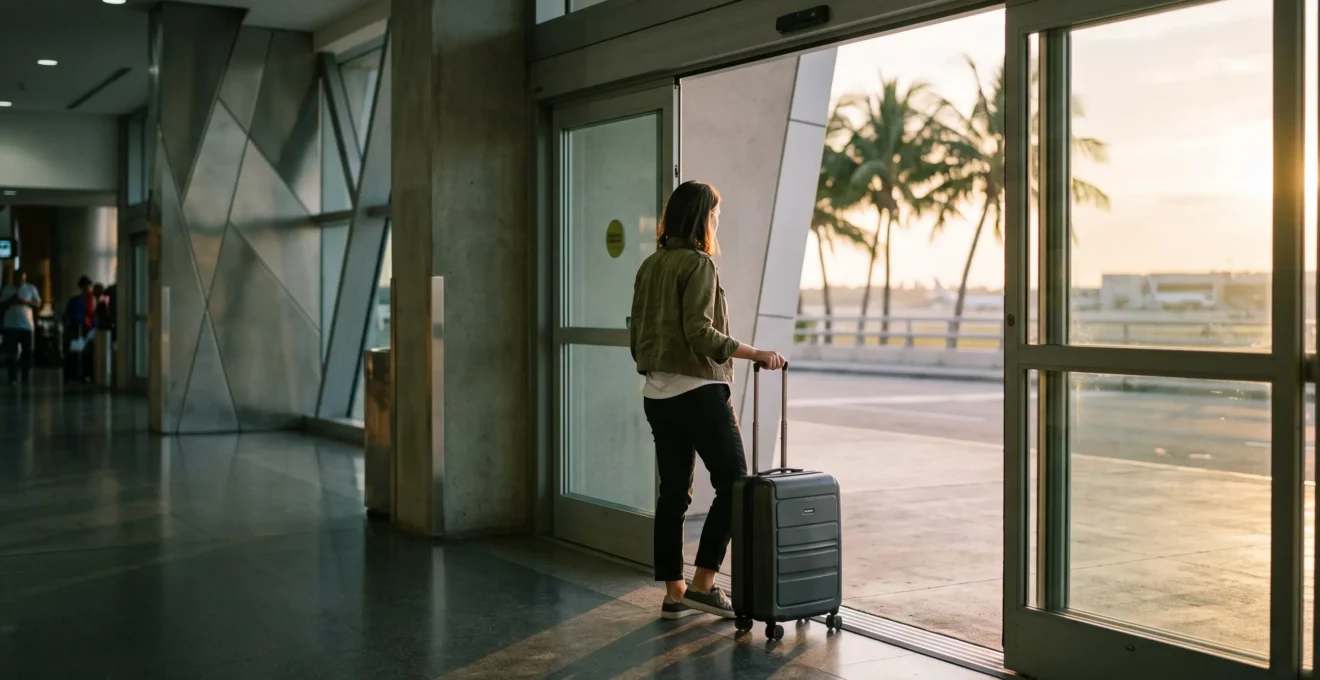
The most convenient places to buy a SIM card—the airport and your resort—are strategically the worst, charging significant markups.
- Airport kiosks add a 20-30% markup over local store prices for the exact same data plans.
- Resort prices can be triple the fair local price, preying on a captive tourist market.
Recommendation: If possible, buy your Altice SIM at an official store or authorized dealer in town for maximum savings. If you must buy at the airport, opt for the smallest plan to get connected and top up later at a local « colmado. »
For any UK traveller landing in the Dominican Republic, the first logistical hurdle is clear: securing affordable mobile data. Your phone, a lifeline for maps, translations, and contacting family, feels useless without it. The immediate, seemingly obvious solutions present themselves the moment you clear customs: a brightly lit kiosk at the airport or, later, a small shop in your resort’s lobby. Both promise instant connectivity, a tempting offer after a long flight. This convenience, however, comes at a hidden cost.
Most travel advice focuses on a simple comparison between the main providers—Altice, Claro, and Viva—weighing their coverage maps and basic features. While useful, this overlooks the single most important factor for a savvy traveller: your point-of-sale strategy. The decision is not just about which network to choose, but *when* and *where* to purchase your service to avoid the systemic price inflation aimed squarely at tourists. The price you pay for a 7-day data plan can easily double or triple based on this choice alone.
But what if the key to smart connectivity wasn’t just about picking the cheapest provider, but about understanding the pricing game? This guide moves beyond the surface-level comparisons. We will establish the fair price benchmark for data in the Dominican Republic and expose the « captive market markup » you’ll face at airports and resorts. We’ll provide a clear, strategic timeline for purchasing your SIM, covering everything from the activation process to recharging at local corner shops, and even touch upon related travel essentials like the E-Ticket and currency exchange to arm you with a complete cost-saving mindset for your trip.
This article provides a comprehensive strategy for acquiring mobile connectivity and handling travel formalities in the Dominican Republic. Explore the sections below to understand the nuances of each step.
Summary: Dominican SIM Cards & E-Tickets: The Strategic Buyer’s Guide
- Why Do Most Dominicans and Tourists Use Altice Over Claro or Viva?
- How to Activate an Altice Tourist SIM Card and Buy a Data Plan?
- Which Altice Data Plan Suits a 7-Day Holiday With Moderate Usage?
- The SIM Card Markup Where Resorts Charge Triple the Fair Price
- How to Recharge Your Altice SIM Card at Dominican Corner Shops?
- Should You Submit Your Dominican E-Ticket 72 Hours or 24 Hours Before Flying?
- ATM Withdrawals or Currency Exchange Offices: Which Gives Better Peso Rates?
- How to Fill Out the Dominican E-Ticket Form Without Errors or Airport Delays?
Why Do Most Dominicans and Tourists Use Altice Over Claro or Viva?
When you arrive, you’ll notice three main players in the Dominican mobile market: Altice, Claro, and Viva. While Claro boasts a massive infrastructure and Viva often wins on pure technical performance, Altice has carved out a dominant position, especially among tourists and a large segment of the local population. This popularity isn’t accidental; it’s the result of a calculated balance of coverage, accessible pricing, and aggressive marketing that makes it the default « good enough » choice for most visitors.
Claro is the legacy giant with extensive network coverage, but its plans can sometimes be perceived as less flexible for short-term users. On the other end, performance metrics show that Viva excels in latency, with the lowest latency of 43 ms, compared to 76 ms for Altice and 78 ms for Claro. This technical edge, while significant for intensive tasks like real-time gaming or high-quality video calls, is often imperceptible for the average tourist whose primary needs are Google Maps, WhatsApp, and social media browsing. For these common use cases, the difference in responsiveness is negligible.
Altice’s strategy succeeds by hitting the sweet spot. Its coverage is robust in the main tourist corridors like Punta Cana, Santo Domingo, and Puerto Plata, which is where most visitors spend their time. More importantly, its prepaid « paquetes » (packages) are famously easy to understand, purchase, and activate. The company has invested heavily in being visible and accessible, with kiosks at airports and a vast network of partner « colmados » (corner shops) and stores across the country. This combination of reliable-enough performance, widespread availability, and straightforward prepaid options makes Altice the path of least resistance for travellers seeking a hassle-free connection.
How to Activate an Altice Tourist SIM Card and Buy a Data Plan?
Getting your Altice SIM card up and running is a straightforward process, but it requires in-person registration due to local regulations. Unlike in the UK where you can order a SIM online, in the Dominican Republic, you must present your physical passport at the point of purchase. This is a mandatory step for all providers and is designed to link every active SIM to an identifiable individual. Before you even think about buying a plan, ensure your smartphone is unlocked; a carrier-locked device from the UK will not accept a Dominican SIM card.
Once you’re at an official Altice store or an airport kiosk, the process is handled almost entirely by the agent. You simply need to state which data plan you want (we’ll cover the options next) and hand over your passport. The agent will handle the registration paperwork, insert the SIM into your phone, and activate the service. The entire setup rarely takes more than ten minutes, and in most cases, your connection will be live before you even leave the counter. Don’t be shy about asking for help; agents are accustomed to assisting tourists and will typically ensure everything is working correctly.
Zero-Stress Activation Checklist: Your Plan of Action
- Bring Your Physical Passport: Digital copies are not accepted. All three major carriers require in-person purchase and passport registration for tourists.
- State Your Desired Plan Clearly: Approach the counter and specify the data plan you’ve chosen. The agent will handle the complex part of the registration.
- Wait for Activation Confirmation: The SIM card should connect to the network almost immediately. Service typically goes live within a few minutes of registration.
- Test Before You Leave: Before walking away, ask the agent to help you test the connection. Make a quick call, send a WhatsApp message, and load a website to confirm everything is working.
This simple, agent-assisted process removes any technical guesswork, making it accessible even for those who aren’t tech-savvy. The key is having your passport ready and knowing which plan you want beforehand.
Which Altice Data Plan Suits a 7-Day Holiday With Moderate Usage?
For a typical 7-day holiday, a « moderate user »—someone who primarily uses maps for navigation, messaging apps like WhatsApp, occasional social media scrolling, and some light web browsing—doesn’t need an expensive, high-capacity plan. The key is to match the data allowance and validity period to your trip’s length. Altice’s prepaid plans are well-suited for this, offering excellent value if purchased at the correct local price. This local price serves as our Fair Price Benchmark against which we can measure airport and resort markups.
The most cost-effective option is often to combine shorter-validity unlimited plans. For example, for a 7-day trip, you could activate a 5-day unlimited plan for 139 DOP (about $2.50) and then top it up with a 3-day unlimited plan for 99 DOP (about $1.70) when it expires, giving you 8 days of unlimited data for under $5. This strategy provides more than enough data for a moderate user. For context, most travel SIM plans in the country commonly range from 3GB up to unlimited, with prices starting around $15 USD through international resellers, which makes Altice’s local rates incredibly competitive.
Below is a breakdown of Altice’s standard prepaid data plans, which establishes the true local cost you should aim for. The « Tourist Package » is often promoted at airports but may be overkill for a moderate user on a short trip.
| Plan | Price | Data / Validity |
|---|---|---|
| 1-Day Unlimited | 49 DOP ($1) | Unlimited data, 1 day |
| 3-Day Unlimited | 99 DOP ($1.7) | Unlimited data, 3 days |
| 5-Day Unlimited | 139 DOP ($2.5) | Unlimited data, 5 days |
| Tourist Package | 550 DOP ($10) | 15 GB + unlimited calls/SMS + 300 DOP credit |
Ultimately, for a week of moderate use, purchasing the 5-day unlimited plan initially and planning to top up with a 1-day or 3-day plan later is the most economically sound strategy. This gives you all the data you need without overpaying for a large package you won’t fully utilize.
The SIM Card Markup Where Resorts Charge Triple the Fair Price
Here we arrive at the core of the purchasing strategy: understanding the « Captive Market Markup. » The price you pay for an Altice SIM card is not fixed; it varies dramatically depending on where you buy it. Airports and resorts are the most convenient locations, but they leverage this convenience to charge significantly higher prices than what you’d pay in a local town. This is where uninformed travellers lose money unnecessarily.
The markup begins the moment you land. While buying a SIM at the Punta Cana airport kiosk is tempting, be aware that prices there are already inflated. Studies show that airport counters typically carry a 20–30% markup compared with city stores, and they often offer a more limited selection of plans. The real price gouging, however, happens once you’re inside your resort. Isolated from local shops and competition, resort gift shops or dedicated tech stores can charge two to three times the fair price for the exact same SIM card and data plan. A $10 Tourist Package could easily be sold for $25 or $30.
To illustrate, let’s compare the fair price benchmark with what’s offered at an airport. The prices are still reasonable compared to UK roaming, but the markup is already present. This gap widens exponentially at a resort.
| Package | Price at Airport Kiosk |
|---|---|
| 1 GB / 1 day, unlimited talk | 50 DOP ($1) |
| 3 GB / 3 days, unlimited talk | 100 DOP ($2) |
| 5 GB / 5 days, unlimited talk | 140 DOP ($3) |
| Tourist Package (15 GB) | 550 DOP ($10) |
The strategic takeaway is clear: avoid buying your SIM card at the resort at all costs. If you need immediate connectivity upon arrival, the airport is a tolerable compromise. The smartest move is to buy the smallest, cheapest plan at the airport (e.g., the 1-day plan for $1) just to get you to your hotel with functioning maps, and then purchase a longer-term plan at a proper Altice store or authorized dealer in the nearest town the next day.
How to Recharge Your Altice SIM Card at Dominican Corner Shops?
If you follow the strategy of buying a minimal plan at the airport, you’ll need to top up your data a few days into your trip. Fortunately, this is incredibly easy and cheap to do, thanks to the Dominican Republic’s ubiquitous « colmados. » These small, family-run corner shops are the lifeblood of every neighbourhood, selling everything from cold drinks to groceries, and almost all of them offer mobile phone recharges (recargas).
The process is simple and low-tech. You don’t need to buy a physical voucher or scratch card. Simply walk up to the counter and say, « Una recarga para Altice, por favor. » The shopkeeper will ask for your phone number (« su número ») and the amount you want to add. You can either add a specific amount of credit (e.g., 100 pesos) or, more efficiently, ask to purchase a data plan directly. For example, you can say « un paquete de cinco días » (a five-day plan). You tell them your number, pay in cash, and the shopkeeper will process the transaction electronically. Within seconds, you’ll receive an SMS from Altice confirming that the credit or data plan has been added to your account.
This method is not only convenient but also ensures you pay the true local price, completely bypassing the tourist markups. Any colmado, pharmacy, or supermarket displaying an Altice logo can provide this service. It’s the standard way Dominicans manage their prepaid phones, and it’s the most cost-effective way for a traveller to stay connected beyond their initial purchase. All you need is your phone number written down and a small amount of Dominican pesos in cash.
Should You Submit Your Dominican E-Ticket 72 Hours or 24 Hours Before Flying?
Beyond connectivity, the Dominican E-Ticket is a mandatory digital form for both entry and exit that combines immigration, customs, and health declarations. A common point of confusion for travellers is the timing of submission. The official advice provides a clear window, but personal travel plans can influence the optimal moment to act. The key is to balance having the QR code ready with ensuring all your information is final.
Official guidelines confirmed by immigration sources recommend that travellers should complete their E-Ticket between 72 and 24 hours before flying. The ideal window is often cited as 48-72 hours prior to departure. Submitting within this timeframe ensures that your flight details are correctly registered in the immigration system, reducing the chance of errors. Submitting too early (e.g., a week in advance) is not possible, as the system only accepts applications for imminent flights. Waiting until the last minute (e.g., at the airport) can create unnecessary stress if you encounter internet issues or make a mistake under pressure.
However, there’s a strategic reason some travellers, particularly solo flyers, wait until after they’ve completed online check-in (usually 24 hours before the flight). The E-Ticket form asks for your seat number, which is often only assigned at check-in. While you can submit the form without a seat number and it will still be valid, some prefer to have every field completed for peace of mind. If your plans are firm and you are travelling with a group, submitting earlier is better, as one form can cover the entire family. The system is flexible, so don’t panic if a detail changes.
Your E-Ticket Post-Submission Action Plan
- Need to Make a Change?: If your flight or seat number changes after submission, do not fill out a new form. Log back into the eTicket portal and use the « Consultation » option with your application code to access and edit your existing form.
- Traveling with Family?: Submit the form for everyone at once. You can add companions to a single application at the beginning of the process, which generates one QR code for the whole group.
- Finalizing Details: For solo travelers, consider waiting until after online check-in (around the 24-hour mark) to ensure your seat number is final before generating the QR code.
- Save the QR Code: Once submitted, you’ll receive a QR code. Screenshot it or save it as a PDF on your phone. You do not need to print it, but having an offline copy is essential.
- Verify the QR Code: Ensure the final QR code clearly states it is for your ARRIVAL (« ENTRADA »). You will need to fill out a separate form before your departure to get an exit (« SALIDA ») QR code.
For most travellers, submitting the E-Ticket around the 48-hour mark is the sweet spot. It avoids last-minute rushes while ensuring all flight data is stable in the system.
ATM Withdrawals or Currency Exchange Offices: Which Gives Better Peso Rates?
Just like with SIM cards, getting local currency (Dominican Pesos, DOP) involves navigating options with wildly different costs. The main choices are ATMs, airport currency exchange offices (« cambios »), and hotel exchange desks. While cambios seem convenient, they operate on the same « captive market » principle as resort SIM card vendors. As one expert guide notes, « they usually offer pretty poor exchange rates because they have a captive market and little competition nearby. » Your hotel’s front desk is often the worst offender.
As of early 2025, a good benchmark to keep in mind is that the rate hovers around 58-60 pesos per US dollar (or a proportionally similar rate for GBP). Any offer significantly below this is a poor deal. ATMs almost always provide a better exchange rate than physical exchange offices. However, they come with their own set of potential fees that you must manage strategically. Accepting the ATM’s offer to convert the transaction into your home currency (Dynamic Currency Conversion) is a common trap that adds a hefty 3-7% markup.
The best strategy is to use a debit card from a bank that has low or no foreign transaction fees. When using a Dominican ATM, always decline the currency conversion offer and choose to be charged in the local currency (DOP). This ensures you get the much better wholesale exchange rate from your own bank. Be aware that you will still likely pay two fixed fees: one from the local Dominican bank operating the ATM and one from your home bank for using an out-of-network machine.
| Fee Type | Typical Cost |
|---|---|
| Dominican ATM operator fee | RD$200–300 (~$3.50–5) |
| Home bank’s out-of-network fee | $2.50–5 |
| Dynamic currency conversion markup (if accepted) | 3–7% |
| Cash advance fee (credit card at ATM) | 3–5% plus immediate interest |
To minimize these fixed fees, it’s best to withdraw larger amounts less frequently (e.g., the equivalent of £150-£200 at a time) rather than making multiple small withdrawals. Using an ATM at a major bank branch or a large supermarket during daylight hours is also recommended for security.
Key takeaways
- Avoid Resort Purchases: Buying a SIM card at your resort is the most expensive option, often with a 200-300% markup.
- Airport is a Compromise: Airport kiosks are convenient but have a 20-30% markup. If you must buy here, get the smallest plan possible.
- Local is Best: The cheapest and most effective way to get a SIM or recharge is at an official store or a local « colmado » in town.
How to Fill Out the Dominican E-Ticket Form Without Errors or Airport Delays?
The Dominican E-Ticket is a non-negotiable part of your travel preparation. It is a mandatory digital form for every single person entering or leaving the country, including residents. The good news is that the process is entirely free; any website demanding payment is a scam and not the official government portal. Successfully completing the form hinges on careful data entry and understanding its structure, especially when travelling as a group.
The most common source of errors is simple typos in critical fields like your passport number, date of birth, or flight number. Double-check every entry before submitting. The official process requires you to visit the E-Ticket portal, fill out the fields, and submit to generate your QR code. If you make a mistake, do not start a new application. Instead, use your initial application code to access and edit your existing form. This prevents duplicate entries in the immigration system.
A key feature for families and groups is that one form can cover multiple travellers. At the beginning of the application, you can select the number of people in your party and add their individual details. This is far more efficient than filling out separate forms for each person and generates a single application code and QR code for the entire group, streamlining the process at immigration. Remember, you will need to complete this process twice: once for your arrival to get an « ENTRADA » QR code, and again before you leave the Dominican Republic to get a « SALIDA » QR code for your departure.
The final, crucial step is to save an offline copy of the QR code on your phone. Take a screenshot or download the PDF. Airport Wi-Fi can be unreliable, and you will be required to present this code before you can check in for your flight home, so you cannot depend on having an internet connection to access it.
By mastering these logistical details—from strategically timing your SIM card purchase to accurately completing your E-Ticket—you shift from being a passive tourist to a savvy traveller. This proactive approach not only saves you money but also eliminates the most common sources of travel stress, allowing you to focus on enjoying everything the Dominican Republic has to offer.
Frequently Asked Questions about the Dominican E-Ticket
Is the E-Ticket really free?
Yes, the Dominican government doesn’t charge a cent for the E-Ticket; any site requesting payment is not official.
Can one form cover my whole family?
Yes, instead of filling a separate form for each person, you select the number of travelers in your group at the start and enter everyone’s details in one form.
Is it mandatory for everyone, including residents?
Yes, it is 100% mandatory for every traveler, including Dominican citizens and residents.