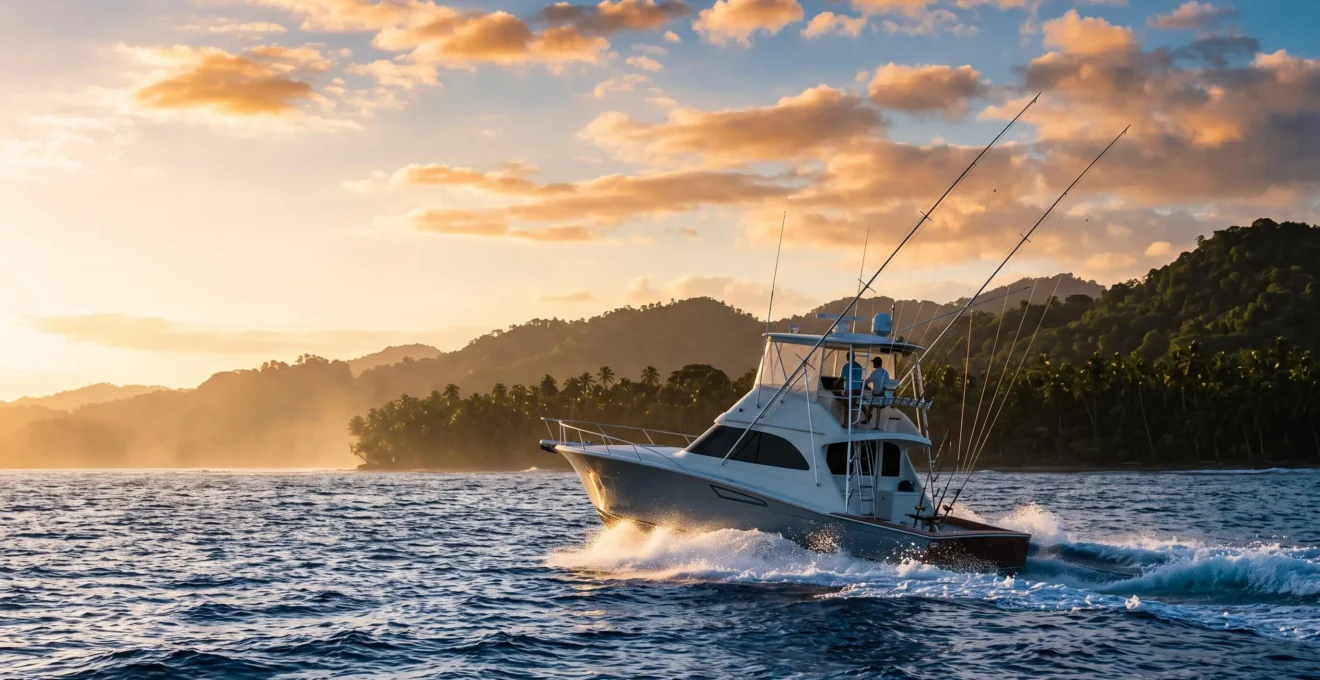
The success of your Dominican marlin trip depends more on the captain’s credentials than the charter’s price tag.
- Reputable charters are defined by licensed captains, clear catch-and-release policies, and tournament-grade equipment.
- Marlin fishing requires a full-day commitment to reach the productive offshore drop-offs and FADs.
Recommendation: Use the pre-booking questions in this guide to rigorously vet any potential charter and book with the confidence of a seasoned angler.
For a UK angler, the dream of battling a blue marlin under the Caribbean sun often points directly to the Dominican Republic. You see the pictures, you hear the stories, and you start searching online. Immediately, you’re hit with a dizzying array of « Punta Cana Fishing » websites, all showing smiling tourists with impressive catches, offering deals for half-day and full-day trips. But a nagging question arises: which of these are legitimate, high-performance operations, and which are simply tourist-level party boats that happen to have a few fishing rods on board? The options are overwhelming, and the fear of spending a significant sum on a disappointing day is very real.
Most guides will give you a generic list of fish species and tell you to « book a charter. » They compete on price, not on the factors that actually lead to a successful fishing experience. But what if the key wasn’t finding the cheapest trip, but learning how to identify the most professional one? This guide is different. It’s written from the perspective of a charter evaluator. We’re not here to sell you a trip; we’re here to give you a framework for vetting captains and boats. We will teach you the critical questions to ask, the red flags to watch for, and the operational differences between a charter that gets you on the fish and one that just takes you for a ride.
We’ll start by confirming why the DR’s reputation is world-class, then dive into the crucial location and seasonal choices. Most importantly, we’ll equip you with a checklist to dissect a charter’s quality before you ever hand over your credit card details. This is your playbook for turning a hopeful vacation into the fishing trip of a lifetime.
Summary: Your Guide to Booking the Right Dominican Fishing Charter
- Why Is the Dominican Republic One of the Caribbean’s Best Marlin Fishing Destinations?
- Punta Cana or Cap Cana Marina: Which Offers Better Deep-Sea Fishing Access?
- When Are Marlin and Mahi-Mahi Most Abundant in Dominican Waters?
- The Charter Boat Red Flags That Predict Poor Dominican Fishing Experiences
- Half-Day or Full-Day Charter: Which Dominican Fishing Option Offers Better Value?
- Why Do Some Dominican Beaches Have Brown Water While Others Are Turquoise?
- Saona Island or Catalina Island: Which Catamaran Route Offers Better Scenery?
- Which Dominican Catamaran Cruises Avoid Crowded Party Boats?
Why Is the Dominican Republic One of the Caribbean’s Best Marlin Fishing Destinations?
The Dominican Republic’s status as a premier marlin destination isn’t just marketing hype; it’s forged in the crucible of world-class tournaments and backed by staggering catch records. While many Caribbean islands offer good fishing, the DR provides what one expert contributor for Marlin Magazine calls one of the most « consistent, vibrant and technically rewarding fisheries » in the world. This consistency is due to a unique combination of deep-water access, nutrient-rich currents, and, most importantly, a multi-generational culture of highly skilled sportfishing captains.
This isn’t a place where fishing is a casual tourist sideline; it’s a serious, competitive sport. Events like the annual Cap Cana Classic Billfish Tournament attract elite teams from around the globe. This high level of competition fosters an environment where innovation, boat maintenance, and fish-finding techniques are constantly refined. The expertise isn’t confined to the tournament boats; it elevates the entire local charter fleet. The captains you hire for a day trip are often the same individuals who have spent decades learning these very waters, competing in these events, and contributing to the island’s legendary fishing culture.
The results speak for themselves. The waters off the DR are known for producing incredible numbers, including a record-setting day where a single boat released 27 blue marlin. This isn’t just luck; it’s the product of a world-class fishery managed by captains who possess an unparalleled understanding of their home turf. When you book a reputable charter here, you’re not just renting a boat; you’re tapping into a deep well of local knowledge and a tradition of excellence.
Punta Cana or Cap Cana Marina: Which Offers Better Deep-Sea Fishing Access?
For the uninitiated, « Punta Cana » is a catch-all term for the entire eastern region. However, for a serious angler, the distinction between the general Punta Cana area and the exclusive Cap Cana Marina is critical. Your choice of departure point directly impacts your travel time to the most productive fishing grounds, the quality of the fleet, and the overall experience. Cap Cana Marina is purpose-built for sportfishing, offering a strategic advantage that many general tourist marinas can’t match.
The key difference lies in proximity to the deep-water drop-offs and Fish Aggregating Devices (FADs) where marlin congregate. While boats from both locations target these areas, Cap Cana’s position often provides a more direct and sometimes shorter run. More importantly, it is the seasonal home to a fleet of tournament-grade sport-fishers. These are not your average charter boats; they are high-performance vessels maintained to the highest standards, equipped with top-of-the-line electronics and tackle. While the broader Punta Cana area offers a wider range of price points, the concentration of elite boats in Cap Cana is undeniable, especially as the Atlantic drop-offs fire up during the June–September peak season.
This table breaks down the key considerations when choosing your base of operations:
| Factor | Cap Cana | Punta Cana / General Area |
|---|---|---|
| Distance to blue marlin FADs | Roughly a 20 to 40-mile run from the marina during peak blue marlin months | |
| White marlin bite distance | As close as 3 to 10 miles offshore, targeting drop-offs and bottom patterns | Varies by boat and season |
| Typical boat fleet | Tournament-grade sport-fishers based seasonally at the marina | Wider range of boats and price points |
When Are Marlin and Mahi-Mahi Most Abundant in Dominican Waters?
Timing is everything in fishing, and aligning your trip with peak seasons for your target species is paramount. While the Dominican Republic offers excellent year-round fishing, specific windows dramatically increase your odds of encountering marlin and mahi-mahi. For a UK angler planning a trip, understanding this calendar is the difference between a good day on the water and the fight of a lifetime. The primary target, the Blue Marlin, is most abundant from March through July, which coincides with the calmest seas.
However, the DR is a multi-species fishery. Mahi-Mahi (also known as Dorado) are a thrilling and delicious target, with excellent numbers present throughout the year, but they are particularly prolific during the spring and fall. White Marlin, a smaller but acrobatically spectacular billfish, have their peak season from December to April. As Capt. Angel Muntaner notes, the unique underwater geography, like a « 15-mile plateau of shallow, broken ground » on the northeast coast, creates perfect conditions for white marlin even in depths that would typically be considered shallow for billfish. This means there’s almost always a world-class species ready to challenge anglers.
The following table provides a clear overview of the peak seasons for the most sought-after game fish in Dominican waters:
| Species | Peak Season |
|---|---|
| Blue Marlin | March – July |
| White Marlin | December – April |
| Sailfish | Year-round, peaking in spring |
| Mahi-Mahi / Dorado | Excellent year-round, best in spring and fall |
| Wahoo | November – February |
The Charter Boat Red Flags That Predict Poor Dominican Fishing Experiences
This is the most critical part of your research. A slick website with stock photos of marlin means nothing. A reputable operation is defined by its professionalism, adherence to regulations, and transparency. A cheap price is often the biggest red flag of all, potentially indicating an unlicensed operator, poor equipment, or a crew that isn’t invested in a successful outcome. Your job as an angler-evaluator is to ask the right questions *before* booking to sift the pros from the pretenders.
The first and most important check is on the crew’s credentials. Offshore fishing requires specific licensing for both the captain and the vessel. Don’t be shy about asking for confirmation. A legitimate charter will be proud to confirm they are fully licensed and insured. Another key differentiator is their policy on billfish. Under current Dominican sportfishing rules, all billfish (Blue Marlin, White Marlin, and Sailfish) are strictly catch-and-release only. Any operator who suggests you can keep and mount a marlin is either ignorant of the law or willing to break it—a massive red flag. A professional crew will be passionate conservationists who prioritize the health of the fishery.
Finally, inquire about permits. Reputable operators handle all necessary fishing permits as part of the booking fee. If an operator tells you to « sort it out yourself at the marina, » you are likely dealing with an unorganized or illegitimate outfit. Use the following checklist to structure your inquiries and ensure you’re booking with a true professional.
Your Pre-Booking Vetting Checklist:
- Captain & Boat Licensing: Confirm that the charter includes a licensed captain and that the boat itself holds all necessary permits for offshore operations.
- Permit Handling: Ask directly if the charter fee includes all required government fishing permits for everyone on board, or if that is an extra, separate process.
- Billfish Policy: Verify their policy on marlin and sailfish. The only correct answer is that they are a 100% catch-and-release species by law.
- Tackle & Equipment: Inquire about the brands and condition of their rods and reels (e.g., Penn, Shimano). A professional crew invests in quality gear.
- The Plan for the Day: Ask what their typical strategy is for targeting marlin or mahi-mahi. They should mention running to offshore FADs, drop-offs, or specific current edges.
Half-Day or Full-Day Charter: Which Dominican Fishing Option Offers Better Value?
The choice between a half-day (4-hour) and full-day (8-hour) charter is a common dilemma, but for the serious angler targeting marlin, the decision is straightforward. This isn’t a question of value based on price, but on opportunity and logistics. A full-day charter is not just a luxury; it is a necessity for a legitimate shot at blue and white marlin. The reason is simple geography: the most productive marlin grounds are located on distant offshore drop-offs and FADs, which can be a 20 to 40-mile run from the marina.
A half-day trip simply doesn’t provide enough time to travel to these grounds, deploy a proper spread of baits, and effectively fish the area before having to head back to port. You might spend the majority of your paid time just getting to and from the fishing zone. Half-day charters are best suited for families, beginners, or mixed-interest groups who are happy to target inshore species like wahoo and mahi-mahi closer to shore. While you can certainly have a fantastic time and catch great fish on a half-day trip, your chances of a marlin encounter are significantly diminished.
If your primary goal is to check « catch a marlin » off your bucket list, you must invest in a full-day trip. It doubles your fishing time in the productive zones and gives the captain the flexibility to adapt to changing conditions and move to different spots. The higher price of a full-day charter reflects the fuel, crew time, and, most importantly, the genuine opportunity to connect with a fish of a lifetime.
| Factor | Half-Day Charter | Full-Day Charter |
|---|---|---|
| Typical price range | Lower end of the $847–$4,700 range | Upper end of the $847–$4,700 range |
| Primary targets | Mahi-Mahi, Wahoo, inshore species | Blue and White Marlin on distant FADs/drop-offs |
| Best suited for | Families, beginners, mixed-interest groups | Serious anglers pursuing marlin |
Why Do Some Dominican Beaches Have Brown Water While Others Are Turquoise?
While your focus may be on the deep blue sea, it’s wise to understand the coastal environment of your destination, especially if you’re traveling with family who expect pristine turquoise beaches. The color of the water along the Dominican coast can vary dramatically, and it’s primarily influenced by two natural phenomena: river runoff and sargassum seaweed. After heavy rains, rivers can discharge large amounts of sediment and tannins into the ocean, temporarily turning the water near their mouths a brownish color. This is a natural and usually short-lived event.
The more significant and widespread issue in recent years has been the influx of sargassum. This floating seaweed originates in the equatorial Atlantic and is carried by currents onto the eastern and southern coasts of the Dominican Republic. When it arrives in large quantities, as it did during a record-breaking sargassum bloom, it can cover beaches and turn the nearshore water brown as it decomposes. However, geography provides a solution.
Crucially for travelers, the sargassum belt primarily affects the east coast. The entire north coast, including areas like Puerto Plata, Sosua, and Cabarete, sits outside the seaweed’s typical path and remains clear year-round. Even in the east, some areas are naturally protected. The reefs shielding Cap Cana and Juanillo help keep their waters noticeably cleaner, while the strong currents at Macao Beach tend to carry the seaweed away. A savvy traveler can use this knowledge to plan their stay and guarantee a turquoise-water experience by choosing their location strategically.
Saona Island or Catalina Island: Which Catamaran Route Offers Better Scenery?
On a non-fishing day, a catamaran trip to one of the nearby islands is a classic Dominican excursion. The two most popular destinations from the La Romana/Bayahibe area are Saona Island and Catalina Island, and while both offer beautiful scenery, they provide very different experiences. The choice between them often comes down to your priorities: classic Caribbean beach scenery versus world-class snorkeling and a quieter atmosphere.
Saona Island is the more famous of the two, known for its vast stretches of white sand beaches, swaying palm trees, and the iconic « natural pool » sandbar in the middle of the sea. It perfectly embodies the postcard image of a Caribbean paradise. However, its fame comes at a price: Saona can be extremely crowded, especially during peak hours, with fleets of speedboats and large catamarans converging on the same spots. The journey is also longer, taking up to two hours by catamaran.
Catalina Island, by contrast, is much closer and generally less crowded. Its main draw is not its beaches (which are smaller and more rustic) but what lies just beneath the water’s surface. The island is renowned for its vibrant coral reefs, particularly a site known as « The Wall, » which offers some of the best snorkeling and diving in the Dominican Republic. As the OutBoating Editorial Team notes, Catalina has « quieter beaches… and a more natural feel. » If your group values underwater exploration over sprawling beaches, Catalina is the superior choice.
| Factor | Saona Island | Catalina Island |
|---|---|---|
| Distance from Marina Casa de Campo | Approx. 35–40 nautical miles | Approx. 10–12 nautical miles |
| Crossing time | 45–55 min by speedboat, 1.5–2 hrs by catamaran | 20–25 min by speedboat |
| Typical group tour price | $70–$120 USD per person | Generally lower group-tour density |
| Crowd factor | Can feel extremely crowded at the natural pool 11 AM–1 PM | Quieter, smaller crowds |
Key Takeaways
- The Dominican Republic’s elite fishing reputation is built on a foundation of tournament-level captain expertise, not just good weather.
- Vetting a charter’s license, insurance, and catch-and-release policy is a non-negotiable step to avoid illegitimate operators.
- A full-day charter is the only practical option for serious anglers pursuing marlin, as it provides the necessary time to reach distant offshore fishing grounds.
Which Dominican Catamaran Cruises Avoid Crowded Party Boats?
The same « vetting » mindset you apply to fishing charters is crucial when booking other excursions, like a catamaran trip. The nightmare scenario for many travelers is booking what looks like a tranquil sailing day, only to find themselves on a packed, booze-soaked « party boat » with 100 other people. The key to avoiding this is to look for specific keywords and operator models that prioritize a different kind of experience. Your goal is to find operators specializing in « small-group sailing » or private charters.
These smaller, often locally-owned companies differentiate themselves by offering a more personalized and authentic day on the water. They deliberately limit their passenger numbers to ensure comfort and quality service. A prime example is the model used by operators like Quetzal Excursions in Bayahibe, which markets itself as specializing in « small-group sea trips. » They focus on the experience, the scenery, and sharing local knowledge, rather than on volume. This is the type of operator to seek out.
Online reviews can be an invaluable tool in this search. Look past the generic « had a great time » comments and search for specifics. As one traveler on TripAdvisor wisely pointed out when discussing Saona Island, the experience « depends which outfitter you use. » They specifically mentioned an operator known for using « empty beach stretches just for their small groups of guests. » This is the kind of intelligence that separates a crowded tourist trap from an exclusive, memorable excursion. By applying a discerning, evaluative approach, you can ensure all your Dominican adventures, both on and off the fishing boat, meet a high standard of quality.
Apply this vetting framework to your research, ask the tough questions, and you can book your next Dominican fishing adventure with the confidence that you’ve maximized your chances for success. The fish of a lifetime is waiting.