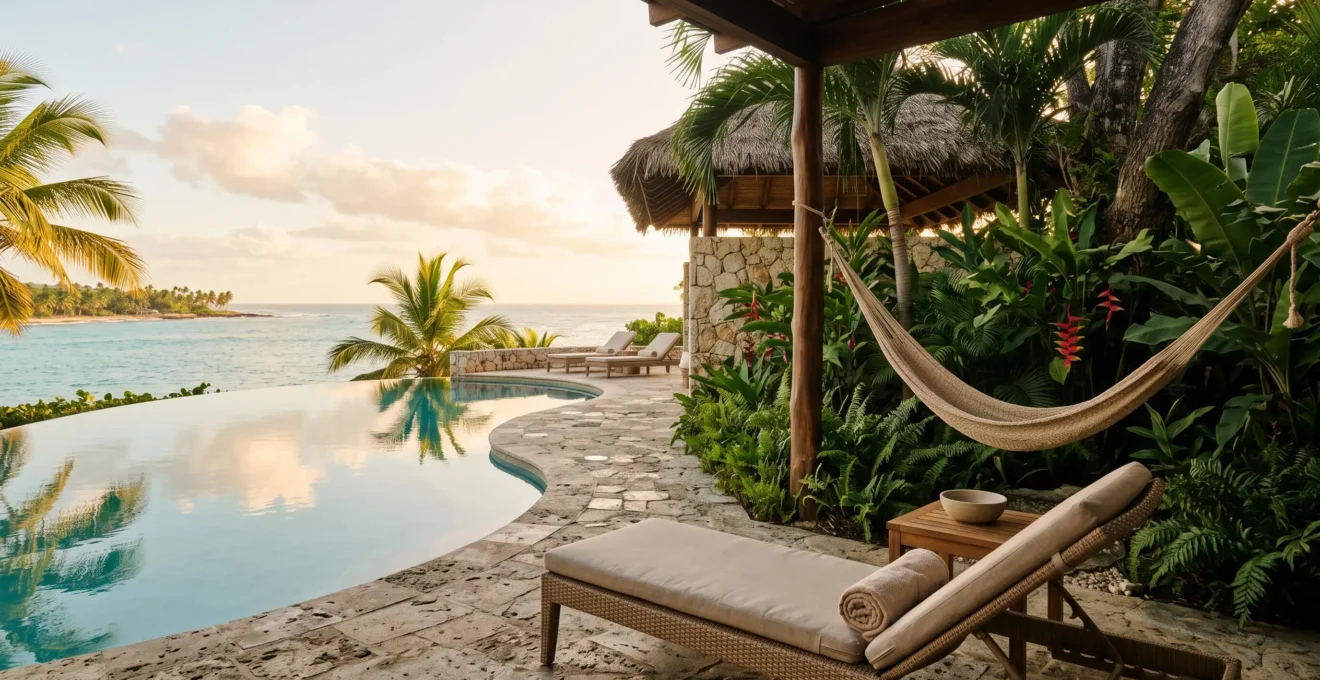
True relaxation in Punta Cana isn’t found by chasing star ratings, but by matching a resort’s ‘Relaxation DNA’—its core design and service philosophy—to your personal needs.
- A sprawling 5-star mega-resort can create more stress and ‘service friction’ than a well-designed, compact 4-star property.
- The best value for UK travellers is often found in the ‘shoulder seasons’ (May and late November), offering perfect weather with fewer crowds and lower prices.
Recommendation: Prioritise a resort’s layout (walkability), acoustic design (garden vs. beachfront), and all-inclusive transparency over brand names and inflated amenity lists.
For many UK couples and families, the dream of a Punta Cana holiday begins with an exciting scroll through dozens of all-inclusive resorts. But excitement quickly turns to exhaustion. The images blur into a sea of identikit turquoise pools, swim-up bars, and king-size beds. Every 5-star property promises « unparalleled luxury, » yet the online reviews are a confusing mix of rapture and regret. You’re left wondering: how do you choose one that guarantees genuine relaxation, not just the *appearance* of it?
The conventional advice—check your budget, read reviews, look for « adults-only »—is a flawed starting point. It fails to address the core reason some holidays feel effortless while others, despite a high price tag, feel like a series of logistical hurdles. The problem isn’t a lack of options; it’s the lack of a proper framework for decoding them. Most travellers focus on what a resort *has* (amenities) instead of how it *feels* (the experience).
But what if the key wasn’t in the star rating, but in the resort’s operational soul? Based on auditing over 60 properties in the region, I can tell you the secret lies in diagnosing a resort’s ‘Relaxation DNA’. This is its inherent character, defined by its approach to space, service, and sound. It’s the difference between a holiday that recharges you and one that drains you.
This guide will cut through the marketing fluff. We will move beyond the brochures to give you a specialist’s toolkit for analysing a resort’s true nature. From identifying the hidden stressors in 5-star properties to understanding the financial traps that catch out unwary guests, you’ll learn how to match a resort’s DNA to your unique definition of peace.
To help you navigate these critical decision points, here is a breakdown of the key factors that truly define a relaxing all-inclusive experience. This guide is structured to give you the insider knowledge needed to choose with confidence.
Summary: Which Punta Cana All-Inclusive Resort Matches Your Relaxation Style?
- Why Do Some 5-Star Punta Cana Resorts Feel More Stressful Than 4-Star Properties?
- How to Identify Adult-Only Punta Cana Resorts That Are Genuinely Peaceful?
- Beachfront or Garden View: Which Punta Cana Room Location Guarantees Better Sleep?
- The All-Inclusive Trap That Costs Punta Cana Guests an Extra £300
- When Is Punta Cana Least Crowded but Still Offers Perfect Beach Weather?
- Do Resort Butlers and Top-Shelf Alcohol Actually Enhance Your Holiday Experience?
- What’s the Difference Between Required Insurance and Rental Company Add-Ons?
- Do Dominican Luxury All-Inclusives Offer Genuine Value or Just Branding?
Why Do Some 5-Star Punta Cana Resorts Feel More Stressful Than 4-Star Properties?
The 5-star rating is often a proxy for scale, not serenity. Many of Punta Cana’s most expansive and luxurious resorts are, in reality, sprawling mega-complexes. They boast a dozen restaurants, multiple pool zones, and a water park, but this vastness introduces a hidden stressor I call ‘service friction’. Your « relaxing » day can quickly become a series of logistical calculations: a 15-minute walk or a 10-minute wait for a golf cart just to get breakfast; needing to pre-book a specific restaurant three days in advance; or navigating a labyrinth of paths to find the « quiet » pool, only to discover it’s packed.
This is where a well-designed 4-star resort can vastly outperform a 5-star giant. A more compact, thoughtfully laid-out property eliminates this friction. When the beach, pool, and main restaurants are all within an effortless five-minute stroll, your holiday becomes spontaneous and fluid rather than a scheduled itinerary. The mental energy saved from not having to plan every move is a significant, if unquantifiable, component of true relaxation.
The layout of a resort is a fundamental part of its ‘Relaxation DNA’. A resort designed on a human scale prioritises ease of access and minimises transit time, directly contributing to a more peaceful state of mind. The image below illustrates this perfectly: the effortless feeling of a compact layout versus the daunting scale of a mega-resort.
As you can see, the ability to move freely and spontaneously between a resort’s key areas is a luxury in itself. Before booking, use a satellite map view to assess the property’s layout. Look for a central cluster of amenities and room blocks that are close to the beach and main pools. This single piece of due diligence can have a greater impact on your relaxation than any list of advertised amenities.
How to Identify Adult-Only Punta Cana Resorts That Are Genuinely Peaceful?
The « adults-only » label is one of the most misunderstood in the travel industry. It’s not a monolith; it’s a spectrum. On one end, you have properties designed for high-energy group holidays, stag and hen dos, with foam parties and DJs at the main pool from midday. On the other, you have sanctuaries engineered for quiet contemplation, reading, and reconnecting as a couple. Simply booking an « adults-only » resort without diagnosing its specific personality is a gamble.
A genuinely peaceful resort reveals its character through its design and policies. Look for resorts that feature multiple, smaller pools scattered throughout the property rather than one central mega-pool, which naturally becomes a social and noise hub. A resort offering a « quiet pool » away from the main bar is explicitly signalling its commitment to tranquillity. Another key indicator is the dining philosophy. Resorts that require reservations for all à la carte restaurants can create a subtle, schedule-driven stress. In contrast, those with high-quality walk-in options offer more spontaneity and freedom.
The ultimate goal is to find a space where you can simply *be*, without the pressure of a forced social scene or the constant thrum of high-energy activities. It’s about finding an atmosphere of intentional calm, where the soundscape is dominated by rustling palms, not a DJ’s playlist.
The experience captured in this image—uninterrupted solitude by calm water—is not an accident. It is the result of deliberate design choices. When researching, scrutinise guest photos and resort maps for these subtle clues. Does the resort’s marketing focus on parties and nightlife, or on wellness, intimate dining, and serene landscapes? The answer will tell you everything you need to know about its true ‘Relaxation DNA’.
Beachfront or Garden View: Which Punta Cana Room Location Guarantees Better Sleep?
The allure of a beachfront room is powerful. The promise of waking up to the sound of lapping waves and a direct ocean view is a cornerstone of tropical holiday marketing. However, from a pure sleep-quality perspective, it’s often a counter-intuitive trap. In many resorts, the prime beachfront and ocean-view rooms are also closest to the resort’s main arteries of activity: the beach bar, the main pool, and the evening entertainment stage. This means your tranquil ocean soundtrack can be frequently interrupted by late-night revellers, cleanup crews, or the bass beat from a 10 PM show.
Conversely, a well-placed « garden view » or « tropical view » room can be an oasis of quiet. Set back from the main activity hubs, these rooms are often surrounded by dense, mature landscaping. This foliage acts as a natural acoustic buffer, dampening ambient noise from both within the resort and from neighbouring properties. The sound of distant music is replaced by the gentle chirping of coqui frogs and rustling leaves, creating a far more conducive environment for deep, uninterrupted sleep.
This isn’t to say all beachfront rooms are noisy or all garden rooms are silent. The key is to analyse the resort map with an ‘acoustic’ mindset. A beachfront room at the far end of a property, away from the central pool, could be perfectly quiet. But as a general rule, paying a premium for a direct ocean view can sometimes mean inadvertently paying for a ringside seat to the resort’s noisiest areas.
The dense, layered foliage shown here is more than just decoration; it’s a functional element of resort design that insulates your room from unwanted noise. When you prioritise guaranteed peace over a prestigious view, you often find better value and a more restorative experience. Consider saving the room-upgrade budget and instead invest it in experiences that genuinely enhance your relaxation.
The All-Inclusive Trap That Costs Punta Cana Guests an Extra £300
The core promise of an all-inclusive holiday is cost predictability. You pay one price, and everything is covered. However, the line between « standard » and « premium » is a lucrative grey area for many resorts, creating a common trap that can easily add £300 or more to a week’s stay for a couple. This ‘value illusion’ stems from a mismatch between a guest’s expectations of « everything included » and the resort’s tiered reality.
The upcharges often cluster around three key areas: premium dining, top-shelf alcohol, and ancillary fees. Your all-inclusive package might cover the buffet and three house restaurants, but the coveted Japanese teppanyaki or romantic steakhouse often carries a hefty surcharge. Similarly, the « free » cocktails are made with local spirits; a Grey Goose or Hendrick’s will appear on a separate bill. These small, individual costs accumulate rapidly over a week.
The following table breaks down these common hidden cost centres. While advertised as optional, the resort environment is expertly designed to make these upgrades feel like an essential part of the « full » experience.
| Hidden Cost Centre | Typical Extra Cost | What It Covers |
|---|---|---|
| Premium/Specialty Restaurant Surcharge | $25–$50 per person | Access to a la carte or ‘gourmet’ dining rooms beyond the buffet |
| Premium Alcohol / Sommelier Upsell | $8–$15 per drink | Branded spirits, imported wine, or ‘top-shelf’ cocktails not covered by house-brand pours |
| Resort / Facility Access Fee | $20–$50 per night | Beach club access, amenity or destination fees often billed per room, not per person |
Even tipping, often advertised as « included, » presents a challenge. While you’re not obligated to tip, surveys suggest nearly 80% of guests tip anyway to secure better poolside service or a preferred dinner table, adding another unbudgeted expense. To avoid these surprises, you must become a fine-print detective before you book.
Action Plan: How to Outsmart Hidden All-Inclusive Charges
- Review the ‘What’s Included’ Fine Print: Before booking, go to the resort’s official website and meticulously read the all-inclusive details. Look for asterisks and phrases like « select domestic brands » or « surcharges apply. »
- Question Your Travel Agent Directly: If using an agent, ask pointed questions. « Are premium-branded spirits like Bombay Sapphire included? » « Is there any charge for room service? » « Are resort fees and airport transfers definitively part of the package price? »
- Clarify Tipping Policy at Check-In: Ask the front desk staff for a clear explanation of how tipping works on the property. This manages expectations and helps you budget for the reality of the service culture, not just the marketing.
- Budget for Inevitable Fees: As a rule of thumb, budget an extra $20 to $50 per night for resort fees, destination fees, or other mandatory charges that are rarely included in the initial advertised price from third-party booking sites.
When Is Punta Cana Least Crowded but Still Offers Perfect Beach Weather?
Timing your Punta Cana trip is a delicate balance between weather, crowds, and cost. Many UK travellers default to the peak winter season (December to April) to escape the cold, but this means paying the highest prices and sharing the beach with the largest crowds. This is especially true given that the region is the country’s primary tourist gateway; in 2024, a staggering 59% of all tourist arrivals entered via Punta Cana airport, meaning even « quiet » weeks can feel busy.
The real sweet spot for a relaxing holiday lies in the ‘shoulder seasons’. These are the periods just outside the peak, offering the best of both worlds. The first, and arguably best, is the month of May. As one local expert puts it, this is the prime window for tranquillity. This insight comes directly from those who see the ebb and flow of tourists firsthand.
If you asked me personally when I tell my friends to visit, I’d say May. The massive spring break crowds have flown home, but the hurricane season hasn’t really kicked in yet.
– Local boat captain, Boat Trips Punta Cana
The second shoulder season is from late November to early December, right after the hurricane season has passed but before the Christmas holiday rush begins. During these periods, you can expect resort occupancy to be noticeably lower, temperatures to be ideal for the beach, and prices for flights and accommodation to be 20-40% cheaper than their peak-season equivalents. The trade-off is a slightly higher chance of a brief rain shower, but it’s a small price to pay for the significant increase in personal space and value.
This table from a recent seasonal analysis clearly illustrates the trade-offs you’ll face when planning your trip.
| Period | Crowd Level | Weather / Hurricane Risk | Price Trend |
|---|---|---|---|
| December–April (peak) | High, especially around holidays | Driest, lowest hurricane risk | Highest of the year |
| May / late Nov–early Dec (shoulder) | Noticeably thinner | Good weather, minimal storm activity | 20–40% lower than peak |
| June–November (hurricane season, Sept peak risk) | Lowest of the year | Higher rain and storm risk, especially September | Up to 40–50% lower than peak |
Do Resort Butlers and Top-Shelf Alcohol Actually Enhance Your Holiday Experience?
As you move into the premium and luxury tiers of all-inclusive resorts, you’ll see services like personal butlers and « top-shelf » alcohol heavily advertised. These are positioned as the ultimate markers of a carefree, elevated experience. But do they genuinely reduce stress and increase relaxation, or are they a form of performative luxury that adds little tangible value?
Let’s consider the butler. The promise is a single point of contact who will handle all your needs: unpacking your luggage, booking dinner reservations, and drawing a rose-petal bath. In theory, this removes logistical friction. In practice, it can introduce a new layer of social management to your holiday. You now have a person to coordinate with, to tip, and whose presence might make you feel you need to be « on » or constantly thinking of tasks for them to perform. For many independent UK travellers, the simple freedom of making their own plans is more relaxing than delegating them.
The appeal of top-shelf alcohol is more straightforward, but its value is also debatable. If your holiday happiness hinges on drinking a specific brand of gin or vodka, then a package that includes it is worthwhile. However, for most people, the local spirits offered in a standard package are perfectly adequate for cocktails by the pool. The ‘premium’ offering often serves a psychological purpose: it makes you *feel* like you’re receiving something exclusive. But after the second mojito, the marginal difference in taste is often negligible, yet the price difference in the holiday package is substantial.
The critical question to ask yourself is: does this amenity remove a point of friction or simply add a layer of complexity? True luxury isn’t about having someone to unpack for you; it’s about not having to think about unpacking at all because you’re already relaxed and on the beach. It’s about seamlessness, not servitude.
What’s the Difference Between Required Insurance and Rental Company Add-Ons?
For travellers looking to explore beyond the resort, renting a car offers unparalleled freedom. However, the insurance process in the Dominican Republic can be a significant source of confusion and unexpected costs, turning an exciting prospect into a stressful ordeal at the rental counter. Understanding the difference between what is legally required and what is an optional (but often aggressively sold) add-on is critical.
The most important piece of information is a non-negotiable rule of the road. As one definitive guide states, there is one type of insurance you absolutely must purchase locally.
This is the single most important rule to remember: you cannot drive a rental car legally in the Dominican Republic without purchasing the local Third-Party Liability insurance.
– QEEQ Car Rental Insurance Guide, Navigating Car Rental Insurance in the Dominican Republic
This Third-Party Liability (TPL or *Seguro Obligatorio*) is mandatory and covers damage you might cause to other people or their property. It does *not* cover damage to your rental car. This is where the add-ons come in. The rental company will strongly encourage you to buy their Collision Damage Waiver (CDW), which limits your financial liability for the rental vehicle itself. Many UK travellers assume their credit card’s rental insurance will cover this, but this is a risky assumption. Some local Dominican vendors may not accept foreign credit card coverage and will insist you buy their CDW, placing a large hold (often thousands of pounds) on your card if you refuse.
To navigate this successfully, you must be prepared. Here are the key steps to take before you arrive at the rental desk:
- Budget for TPL: Factor the cost of the mandatory Third-Party Liability insurance into your total car rental budget from the outset. It is not optional.
- Confirm Credit Card Coverage: Before you travel, call your credit card provider and ask for a « Letter of Coverage » that explicitly states it covers car rentals in the Dominican Republic.
- Be Prepared for a Large Hold: If you plan to decline the rental company’s CDW, ensure you have a high enough credit limit to accommodate a significant security deposit.
- Stay Firm and Document Everything: If you decline the CDW, be polite but firm. Have your Letter of Coverage ready. Meticulously inspect the vehicle for any pre-existing damage and take photos/videos before you drive away. Ensure all final charges and decisions are reflected in your signed rental agreement.
Key takeaways
- Layout over luxury: A compact, walkable 4-star resort often provides a more relaxing experience by eliminating ‘service friction’ compared to a sprawling 5-star mega-resort.
- Garden views for quiet: A room with a ‘garden view’ often guarantees better sleep, as the surrounding foliage acts as a natural acoustic buffer against noise from pools and bars.
- The shoulder season is the sweet spot: For the best balance of perfect weather, fewer crowds, and lower prices, UK travellers should target May or late November/early December.
Do Dominican Luxury All-Inclusives Offer Genuine Value or Just Branding?
The leap from a standard all-inclusive to a « luxury » property can involve a price jump of 200-300%. This begs the question: are you paying for a genuinely superior experience, or are you simply paying for a brand name and the illusion of exclusivity? The answer lies in understanding what drives the all-inclusive decision in the first place. For the vast majority of travellers, the primary motivation is predictability. According to industry data, 77% of travel advisors say their clients pick all-inclusive vacations specifically to control costs.
This is where true luxury properties justify their premium. While a standard resort uses the « all-inclusive » label as a marketing hook and then erodes it with upcharges, a genuine luxury all-inclusive delivers on the original promise with total transparency. The higher price tag is meant to eliminate the ‘value illusion’ entirely. Top-shelf spirits, all à la carte dining, 24-hour room service, and even gratuities are typically folded into the upfront cost. As one traveller noted after experiencing both tiers, the difference is about closing the gap between the marketing and the reality.
I’ve learned from personal experience that many resorts advertise enticing rates only to surprise you with unexpected fees, a gap between marketing promise and delivered value that genuine luxury properties are designed to close.
– A traveler’s personal experience, Grand Goldman Travel
The value proposition of a luxury all-inclusive is therefore not about having more things, but about having to think about fewer things. It’s the removal of all financial friction and decision fatigue. You never have to ask, « Is this included? » because the answer is always yes. As the following price comparison shows, the tiers are worlds apart, and the choice depends on your personal definition of value.
The price difference between standard and premium tiers is significant, reflecting this fundamental difference in philosophy.
| Tier | Price per Person, per Night (2026) |
|---|---|
| Standard All-Inclusive | $300–$400 |
| Premium / Luxury All-Inclusive | $1,200+ |
Ultimately, genuine value is found in the property whose philosophy aligns with your own. If your goal is the absolute lowest upfront cost, a standard resort is sufficient, provided you budget for extras. If your goal is the complete absence of financial stress during your holiday, a true luxury property delivers that peace of mind, albeit at a significant premium.
Now you possess the framework to decode any resort’s marketing materials and online reviews. The next logical step is to apply this critical lens to your own shortlist, enabling you to choose a property with confidence, knowing its ‘Relaxation DNA’ is a perfect match for yours.
Frequently Asked Questions About Which Punta Cana All-Inclusive Resort Matches Your Relaxation Style?
What does Third-Party Liability (TPL) actually cover?
TPL is mandatory under Dominican law and covers damage or injury you cause to other people or their property, but it does not cover damage to the rental vehicle itself, your belongings, or fines.
What does a Collision Damage Waiver (CDW) add on top of TPL?
A CDW limits the driver’s financial liability for damage to the rental car itself, usually with an excess, and is strongly advised in addition to the mandatory TPL.
Can I simply rely on my credit card’s insurance instead of the rental company’s add-ons?
Not always: some providers in the Dominican Republic require you to purchase their insurance even if your credit card offers coverage, so confirm acceptance in writing before declining the counter offer.