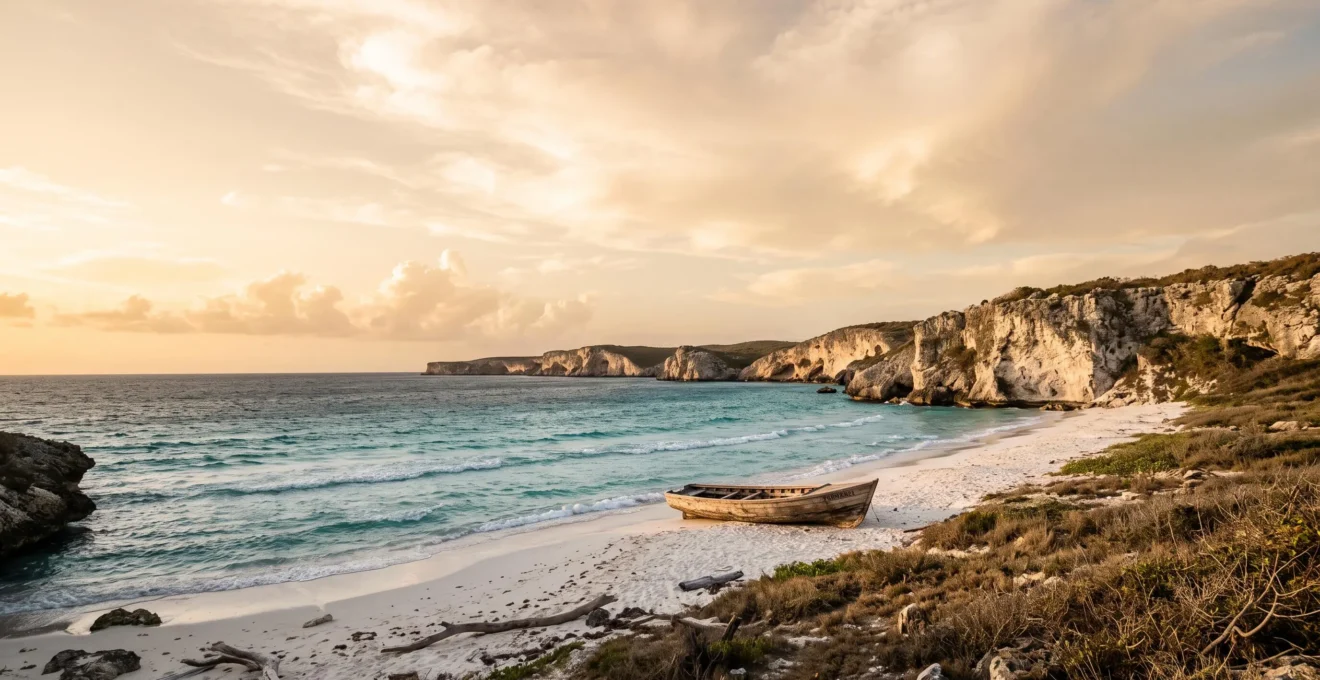
The real hidden places in the Dominican Republic aren’t just « less popular »; they’re protected by cultural and logistical barriers that typical tourism can’t overcome.
- Many pristine beaches are empty by law (environmental protection), not by accident or lack of discovery.
- True access comes from mastering local transport like guaguas and motoconchos, not rental cars or tour buses.
Recommendation: Stop looking for spots on a map and start understanding the local rhythms, from the Sunday pasadía to the late-night colmado.
Let’s be honest. You’ve read the articles, seen the pins, and bookmarked the blog posts promising « the real, untouched Dominican Republic. » You follow the advice, rent a jeep, and drive for hours to a « secret » beach, only to find a makeshift parking lot and a handful of other explorers who read the same guide. The frustration is real. Mainstream « off-the-beaten-path » travel has become a paradox, where the most famous hidden gems, like Bahía de las Águilas or corners of the Samaná peninsula, are now crowded with people searching for solitude.
This isn’t a guide that will give you a list of coordinates to plug into your GPS. That would be a betrayal of the very places we seek to protect. Instead, this is a key. It’s a guide to understanding the invisible systems—the cultural codes, the legal frameworks, and the logistical hurdles—that keep the truly special corners of this island shielded from the glare of mass tourism. The secret to finding hidden Dominican locations isn’t in knowing *where* they are, but in understanding *why* they remain hidden. Once you understand the logic, you’ll start seeing the authentic Quisqueya everywhere.
This article will deconstruct the very idea of a « hidden spot » in the Dominican context. We will explore the legal and cultural forces that preserve these places, the transport systems you must master to reach them, and the unwritten social rules you must respect once you arrive. Prepare to change the way you explore.
Summary: Decoding the Map to the Unseen Dominican Republic
- Why Do Some Stunning Dominican Beaches Have Zero Tourist Infrastructure?
- Southwest Coast or Northern Interior: Which Dominican Region Is Truly Less Touristy?
- How to Reach Hidden Dominican Beaches Using Only Public Transportation?
- When Do Dominican Hidden Beaches Fill With Local Families on Weekends?
- Why Do Dominican Colmados Operate Until Midnight When Supermarkets Close at 8 PM?
- Why Do Dominicans Call Their Island « Quisqueya » Instead of Its Colonial Name?
- When Should Foreign Visitors Use « Quisqueya » Without Seeming Performative?
- The Ethical Dilemma of Instagramming Undiscovered Dominican Locations
Why Do Some Stunning Dominican Beaches Have Zero Tourist Infrastructure?
The most common mistake explorers make is assuming a pristine, empty beach is simply undiscovered. More often than not, it’s empty by design. The most breathtakingly beautiful and untouched parts of the Dominican coastline are often locked within a fortress of environmental law. This isn’t an oversight; it’s a deliberate, hard-won battle between developers and conservationists. The result is what I call the Protection Paradox: the very laws that prohibit even a single beach bar are what create the « wild paradise » travellers are searching for.
The quintessential example is the region around Bahía de las Águilas. It’s the poster child for « hidden, » yet its lack of development has nothing to do with secrecy. This area is part of the Jaragua National Park, a UNESCO Biosphere Reserve established in 1983. As noted by travel experts, this site has been a battleground for years, pitting tourism entrepreneurs against ecological groups fiercely defending its fragile ecosystem and pre-Hispanic archaeological sites. The government has held a firm line. Despite major hotel groups like Marriott having extensive operations elsewhere, presidential policy explicitly blocks construction in these protected zones. Even with 10 existing facilities and 13 more projects underway nationwide by one major group, they cannot build here.
So when you stand on a beach with no footprints but your own, don’t assume you’re the first to find it. You are likely standing on legally protected ground. This understanding changes your perspective from that of a « discoverer » to that of a privileged guest in a natural cathedral. The lack of a cocktail bar isn’t a business opportunity; it’s a testament to the country’s commitment to preserving its natural heritage.
Southwest Coast or Northern Interior: Which Dominican Region Is Truly Less Touristy?
The debate between the arid Southwest and the lush Northern Interior is central to any discussion of « un-touristy » Dominican Republic. But to answer it, we must first define what we mean. If « less touristy » means fewer all-inclusive wristbands and a near-total absence of mass-market infrastructure, the Southwest coast is the undisputed champion. This is not a matter of opinion but of geography, ecology, and development policy. The region, particularly the province of Pedernales, is where the Protection Paradox is most visible. It’s a land of dry forests, cacti, and rugged coastlines, much of it locked away in national parks.
The journey to the Southwest is a commitment. The roads are longer, the towns are fewer, and the landscape feels more like a frontier. It attracts a specific type of traveler: one who is self-sufficient and finds beauty in stark, arid landscapes and profound isolation. The « attractions » here are raw nature—the Oviedo Lagoon’s flamingos, the otherworldly geology, and beaches that are truly, fundamentally empty because there is simply nothing there.
The Northern Interior, by contrast, is different. While it’s certainly a world away from Punta Cana, it is not « undiscovered. » The mountains around Jarabacoa and Constanza, and the hidden valleys of the Cordillera Septentrional, have long been a haven for Santo Domingo’s elite, independent travelers, and a growing community of European and North American expats. The tourism here is more diffuse and integrated. You’ll find charming eco-lodges, organic coffee farms, and small-scale adventure outfits. It is less about total isolation and more about finding your own secluded pocket within a more populated, living landscape. The North is lush, green, and full of life, but its version of « hidden » requires peeling back more layers to get past the established alternative tourism scene.
How to Reach Hidden Dominican Beaches Using Only Public Transportation?
Forget the sanitized comfort of a rental SUV. The true key to unlocking the Dominican Republic’s remote corners lies in mastering its chaotic, vibrant, and incredibly efficient public transport system. This isn’t just about saving money; it’s a rite of passage. Understanding « Guagua Logic » is the single most important skill for an independent explorer. A guagua is a shared minibus or van, a rolling microcosm of Dominican life, blasting merengue and stopping on a dime for anyone who flags it down. There are no official schedules, but there is a powerful, unspoken order to the chaos.
Reaching a remote beach is a process of « chaining » different forms of transport, each one taking you further from the tourist trail and deeper into the local flow. It begins in a major hub, transitions to regional routes, and often ends with a thrilling, dusty ride on the back of a moto-taxi. To a newcomer, the system can seem impenetrable, but it operates on a simple principle: ask, and you shall be guided. Every driver, every fare collector (*cobrador*), and every passenger is a potential source of information.
To clarify the distinct roles of each vehicle in your journey, it’s helpful to see how they compare.
| Transport Type | Typical Fare | Best For | Key Limitation |
|---|---|---|---|
| Carro público (shared taxi) | ~50 pesos (about 1 USD) for short city hops | Short urban/inter-town hops on fixed routes | Only squeezes in 1-2 extra passengers; crowded |
| Guagua (shared van/minibus) | 100-150 pesos between municipalities | Groups and longer rural routes | No fixed schedule; stops frequently, does not run at night |
| Long-distance coach (e.g., Caribe Tours) | Higher fixed fare, air-conditioned comfort | Long inter-city legs (Santo Domingo to regional hubs) | Limited stops; does not reach remote beach access points |
| Motoconcho (moto-taxi) | Negotiated per short trip | The final unpaved ‘last mile’ to isolated beaches | No safety gear standard; price must be agreed beforehand |
Mastering this chain is more than just logistics; it’s a fundamental shift in mindset from being a passive tourist to an active participant in the country’s daily rhythm. The following steps outline a typical journey from the capital to a distant shore.
Your Action Plan: The Public Transport Chain to a Remote Beach
- Start at the Hub: Begin at a major terminal like Parque Enriquillo in Santo Domingo, the chaotic heart of the local bus network.
- Listen and Ask: Listen for drivers and helpers calling out destinations. Don’t be shy; ask directly, ‘¿Dónde están las guaguas para [your next town]?’ to find your ride.
- The Mid-Distance Leg: Board a ‘guagua’ for the journey between towns. Expect a crowded, music-filled, and authentically Dominican experience.
- The Local Transfer: Switch to a smaller ‘guagüita’ or ‘carro público’ for the shorter routes connecting smaller towns closer to your final destination.
- The Last Mile: Hire a ‘motoconcho’ (moto-taxi) for the final, often unpaved, stretch to the beach. Crucially, remember that guaguas rarely run after dark, so plan your return trip well in advance.
When Do Dominican Hidden Beaches Fill With Local Families on Weekends?
You’ve done it. You mastered the guagua system, navigated the dusty backroads, and arrived at a picture-perfect, completely empty beach on a Friday afternoon. You congratulate yourself on finding a true hidden gem. You return on Sunday, expecting the same solitude, only to find the shore transformed into a vibrant, bustling hub of activity, filled with music, laughter, and the smell of cooking food. You haven’t been « discovered »; you’ve just experienced a pasadía.
This is perhaps the most critical piece of cultural timing for any explorer to understand. A beach’s « hidden » status is often only valid from Monday to Saturday. Sunday is the day for the pasadía, the cherished Dominican tradition of a family day trip. For Dominicans, the beach is not a place of quiet contemplation but a social space, an outdoor living room for the entire community. Families arrive in droves with giant coolers, pots of rice and beans, bottles of rum, and powerful speakers. It’s a celebration of family, food, and community.
Understanding the pasadía is essential for two reasons. First, it manages expectations. A beach that is « yours » during the week belongs to the local community on the weekend. To be frustrated by their presence is to misunderstand the very culture you seek to experience. Instead of seeing a crowd, see a privilege: you are witnessing an authentic, joyful expression of Dominican life. Second, it’s a powerful tool for discovery. If you want to know which beaches are the most beloved by locals—not tourists—simply observe where the coolers and speakers are headed on a Sunday morning. The local favorite is often a far more interesting destination than the one that’s merely empty.
Why Do Dominican Colmados Operate Until Midnight When Supermarkets Close at 8 PM?
If the guagua is the circulatory system of the Dominican Republic, the colmado is its heart. To the untrained eye, it’s just a corner store—a small shop selling essentials like rice, oil, and cold Presidente beer. But to ask why a colmado stays open late is like asking why a British pub stays open after the shops close. The answer is the same: its primary function is not commercial, but social. The supermarket sells you goods; the colmado makes you part of a community.
Supermarkets are transactional, anonymous, and efficient. Colmados are the complete opposite. They are the front porch of the neighborhood, the local news station, the informal bank, and the de facto community center, all rolled into one. They stay open late because that’s when life happens. After a long day’s work, people don’t just « stop by » the colmado; they gather *at* the colmado. Plastic chairs and tables spill onto the sidewalk, a game of dominoes starts up, and the day’s events are debated over a shared bottle of rum. It’s the nucleus of the neighborhood’s social life.
This social function is so vital that it even extends to an informal economic system that supermarkets could never replicate. As one expat observer noted, the colmado operates on trust. If you’re short on cash, the owner will often run a tab for you in a notebook known as a libreta—the unofficial paper credit system of the country. This isn’t just business; it’s a relationship. It’s this deep sense of community that explains its hours and its importance.
There is definitely a beauty to this colmado culture. The stores meet even more of a social need than a physical one; they are a nucleus of community activity.
– Annie Rose Ansley, Field Communications Fellow, HOPE International Blog
For the explorer, the colmado is your embassy. It’s where you’ll get the most reliable information, find a motoconcho driver, or simply be welcomed into the local fabric. Learning to frequent the colmado not just as a customer but as a neighbor is the key to unlocking the social life of any Dominican town.
Why Do Dominicans Call Their Island « Quisqueya » Instead of Its Colonial Name?
You will hear it in songs, see it in brand names, and feel it in the passionate roar of a baseball stadium: Quisqueya. While the world knows the island as Hispaniola and the country as the Dominican Republic, for many Dominicans, its true, soulful name is Quisqueya. This isn’t just a quaint nickname; it is a profound statement of identity, a subtle act of decolonial pride that reaches back to a time before European contact.
The name « Dominican Republic » is tied to the colonial order, to Santo Domingo, the first city of the « New World. » But Quisqueya is older and deeper. It is a word from the language of the Taíno, the indigenous people of the island. As cultural publications like La Galería Magazine explain, it means « Mother of all Lands. » To use the name is to acknowledge the island’s pre-Columbian roots and to centre its identity in its indigenous heritage rather than its colonial history. It is a way of saying, « We were here before Columbus, and that identity still matters. »
This « Quisqueya mindset » is a powerful undercurrent in the national psyche. It fuels a fierce pride in the island’s unique culture, a blend of Taíno, African, and Spanish influences that is unlike any other. For the thoughtful explorer, understanding this is crucial. It signals that the « authentic » Dominican experience you’re looking for is often tied to this deep-seated sense of a unique, pre-colonial identity. It’s a quiet resistance to being defined solely by resorts and colonial history. When you hear the national anthem, « Quisqueyanos valientes, » you’re not just hearing a song; you’re hearing a declaration of an identity that transcends its colonial past.
Key Takeaways
- The most pristine places are often empty by law, not by accident. Seek out national parks and understand their protections.
- Mastering the public transport chain of guaguas, carros públicos, and motoconchos is non-negotiable for reaching truly remote areas.
- Respect the local clock: a beach empty on Friday is the heart of a community pasadía on Sunday. Plan accordingly.
- The ultimate act of a respectful explorer is to protect the secret. Do not geotag or publicly broadcast the location of fragile, hidden spots.
When Should Foreign Visitors Use « Quisqueya » Without Seeming Performative?
Now that you understand the weight of the name Quisqueya, the delicate question arises: when, if ever, should you as a foreign visitor use it? Wielded correctly, it can be a sign of deep respect and understanding. Used carelessly, it can come across as performative and awkward, like someone trying too hard to show they’re « in the know. » The key, as with all genuine cultural exchange, is context and intent.
The worst time to use it is as a casual name-drop. Saying, « I just love exploring Quisqueya! » in a conversation with a tour guide will likely be met with a polite, if confused, smile. It’s out of context. The name carries a certain weight and is typically used in moments of patriotic pride, in artistic expression, or in discussions about national identity. It’s not a simple synonym for « the Dominican Republic » in everyday chatter.
The right time to use it is when you are actively engaging with that very sense of identity. If you are in a deep conversation with a Dominican about their country’s history, its music, or its culture, using the name can show that you understand the distinction. For example, you might say, « I am fascinated by the Taíno history and its importance to the identity of Quisqueya. » In this context, the word demonstrates that you see beyond the surface. It shows you are not just a tourist, but someone genuinely interested in the soul of the place. As one writer eloquently put it when describing her identity:
Calling myself Quisqueyana invokes the history before the colonization. I feel more authentic to my roots using this word instead.
– Author, La Galería Magazine, ‘Quisqueyana: Identifying With My Indigenous Roots’
Your goal is to echo that sentiment, not to appropriate it. Use the name not to describe the place, but to acknowledge the feeling of pride that Dominicans have for it. Think of it as a term of endearment you only earn the right to use once you’ve truly come to appreciate the one you’re talking about.
The Ethical Dilemma of Instagramming Undiscovered Dominican Locations
You found it. The perfect cove, the hidden waterfall, the unnamed beach. The light is perfect. Your phone is out. You frame the shot. And now you face the most important decision of your journey. It’s not about filters or captions; it’s about the geotag. To post the location is to share your discovery with the world. It is also, very possibly, to sign its death warrant. This is the great ethical dilemma of modern exploration: the urge to share versus the responsibility to protect the secret.
In the age of social media, a single viral post can transform a secluded paradise into an overcrowded tourist trap in a matter of months. We’ve seen it happen globally, from Iceland to Thailand. The influx of visitors, often unprepared and disrespectful, tramples fragile ecosystems, overwhelms non-existent infrastructure, and displaces the very local culture that made the place special. That geotag is a digital breadcrumb trail leading directly to a place that may not be equipped to handle the attention. It is the digital kiss of death for an undiscovered location.
As someone who seeks genuine, untouched places, you have a higher responsibility. The price of admission to these places is not paid in money, but in the effort, respect, and curiosity it took to find them. To then broadcast the location for a handful of likes is to devalue that journey and to deny others the same sense of discovery. It’s a selfish act that prioritizes personal clout over the preservation of the place itself. The conspiratorial tone of this guide is intentional; these places are secrets to be earned, not content to be consumed.
The ethical choice is clear: share the beauty, but conceal the location. Post your stunning photo, but tag the general province, or simply « Dominican Republic. » Write about the feeling of being there, but keep the directions vague. This is the code of the modern, responsible explorer. You become a guardian, not a marketer. You protect the magic for the next person willing to put in the work, ensuring the cycle of true discovery can continue.
Now that you have the keys to the unseen Dominican Republic, the real journey begins. The next step is to explore with respect, curiosity, and the quiet confidence of someone who seeks to understand, not just to see. Go with care, and protect the secrets you find.