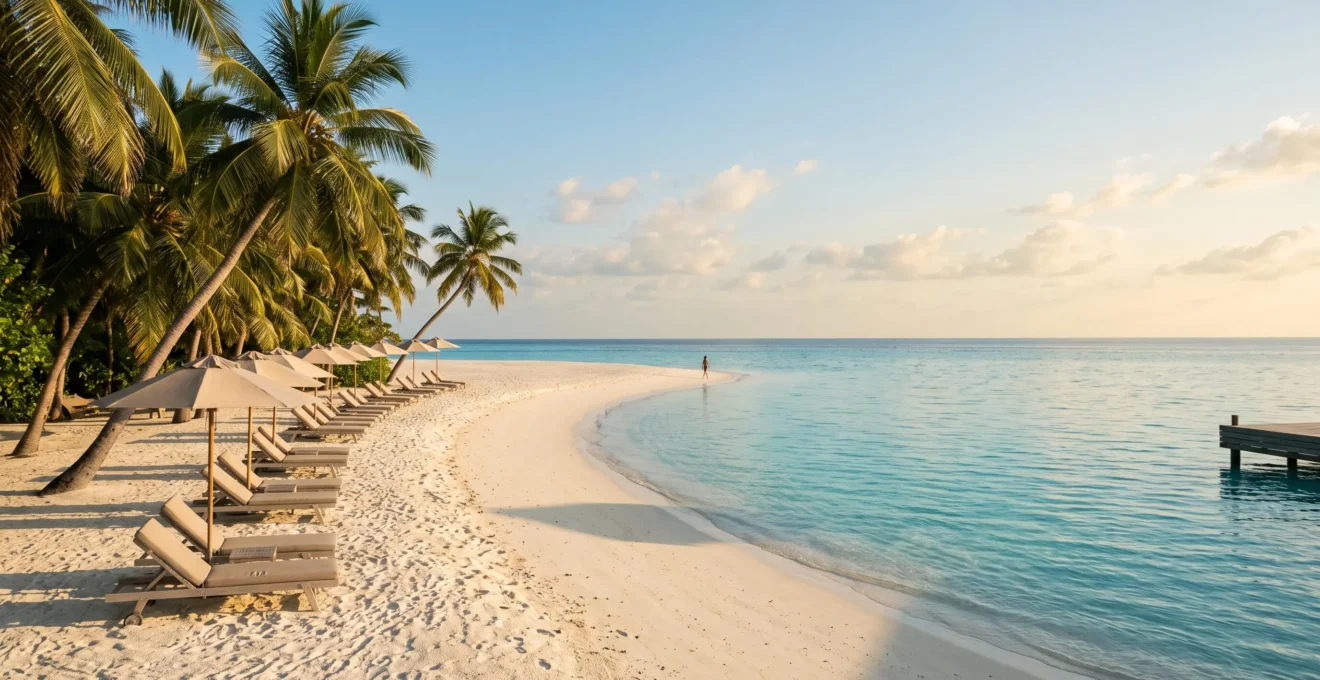
Playa Minitas’s elite status isn’t just about privacy; it’s a result of meticulous environmental engineering and strict access control that public beaches cannot replicate.
- Its sand is powder-fine and seaweed-free due to imported materials and costly offshore barriers.
- Access is strictly managed via a costly day-pass system, filtering the crowds found elsewhere.
Recommendation: To truly appreciate its quality, visit on a weekday morning to avoid the afternoon winds and maximize the value of your access fee.
For the seasoned Caribbean traveler, the term « exclusive beach » often evokes a healthy dose of skepticism. Many destinations claim the title, but few deliver a tangible quality that surpasses the high standards of well-known public shores in places like Punta Cana or Turks and Caicos. The typical markers of luxury—seclusion, high-end services, prestigious location—are expected. But for a true beach connoisseur, the assessment goes deeper, into the very composition of the sand, the clarity of the water, and the mechanics that preserve its pristine state. Playa Minitas, the private jewel of Casa de Campo, is frequently lauded as the Dominican Republic’s most exclusive beach, but the reasons often remain superficial.
Most analyses stop at its location within the ultra-luxe resort, home to world-class golf and a sprawling marina. While these are indicators of status, they don’t define the quality of the beach itself. The real investigation lies in dissecting the elements that contribute to its near-perfect condition. Is the sand naturally superior, or is it curated? Is the water perpetually calm by a fluke of geography, or is it a feat of engineering? The difference between a beautiful beach and an elite one lies not in its passive existence, but in the active, deliberate effort invested in maintaining its perfection.
This assessment moves beyond the generic praise to provide an analytical verdict. We will deconstruct the specific factors that elevate Playa Minitas, comparing its tangible characteristics—from sand granulometry to its defense against sargassum—with those of the best public beaches in the Bavaro region. This isn’t about luxury branding; it’s an examination of the substance behind the status. By understanding the ‘how’ behind its quality, we can definitively determine whether Playa Minitas earns its reputation not just through association, but through superior, measurable standards.
This guide breaks down the critical factors that define beach exclusivity in the Dominican Republic. By examining the tangible differences, you’ll gain an assessor’s eye for what separates a merely beautiful beach from a truly elite one.
Contents: An Assessment of Playa Minitas’s Elite Status
- Why Does Minitas Beach Have Zero Seaweed Whilst Other Beaches Accumulate Tons?
- How Does Minitas Sand Compare to Punta Cana’s Public Beaches?
- Can Day-Visitors Access Playa Minitas Without Staying at Casa de Campo?
- The Minitas Beach Timing Mistake That Brings Rough Waves and Wind
- Where Should You Set Up on Minitas Beach for Perfect Shade Coverage?
- How to Find the Exact Bavaro Beach Spots With Powder-Fine White Sand?
- Why Do Oxybenzone and Octinoxate Harm Dominican Coral Reefs?
- Which Bavaro Beach Sections Have the Softest, Cleanest Sand for Barefoot Walking?
Why Does Minitas Beach Have Zero Seaweed Whilst Other Beaches Accumulate Tons?
The recurring nightmare for many Caribbean destinations is the massive influx of sargassum, which can turn a picturesque shoreline into a decaying, foul-smelling mess overnight. While many beaches in Punta Cana and along the eastern coast battle this issue seasonally, Playa Minitas remains conspicuously, almost unnaturally, clean. This is not a matter of luck or favorable currents; it is a prime example of what can be termed engineered calm. The bay’s pristine condition is the direct result of significant, ongoing investment in mitigation infrastructure.
The primary defense is a series of floating containment barriers positioned far offshore. These booms act as a first line of defense, intercepting the vast mats of sargassum before they can even approach the swimming areas. This ecological insulation is a costly undertaking that few public beach authorities can afford or maintain at such a scale. For hoteliers in less protected areas, the economic toll is immense. As one analysis on the sargassum problem confirms, the phenomenon has been a significant economic burden on hoteliers who pay cleaning brigades and invest in equipment to maintain beach aesthetics. Minitas essentially externalizes this cost into its operational budget, treating a seaweed-free experience as a non-negotiable standard.
Beyond the barriers, any seaweed that does penetrate the perimeter is swiftly removed by dedicated grounds crews who groom the sand daily. This two-pronged approach—proactive offshore interception and reactive shoreline cleaning—ensures the water and sand remain immaculate. It is this systematic, capital-intensive process, rather than any natural advantage, that creates the stark visual and experiential contrast between Minitas and other Dominican beaches that are at the mercy of the Atlantic’s whims.
How Does Minitas Sand Compare to Punta Cana’s Public Beaches?
A beach connoisseur knows that not all « white sand » is created equal. The quality is determined by factors like grain size, color, purity, and compaction at the waterline. This is where a critical analysis of sand granulometry separates the good from the exceptional. While many stretches of Bavaro Beach are rightly famous for their beautiful sand, Playa Minitas exhibits a consistency and texture that are hallmarks of careful curation. The sand at Minitas is often described as « flour-like » or « powder-fine, » a texture that is exceptionally soft underfoot and noticeably different from the more granular composition of many public beaches.
This superior texture is no accident. It is widely understood that the sand at Minitas has been, at least in part, imported and is meticulously maintained to preserve its quality. This grooming process removes shells, pebbles, and organic debris, resulting in a level of purity that is difficult to find on a sprawling public coastline. On public beaches like Bavaro or Macao, sand quality can vary dramatically from one hotel’s beachfront to the next, influenced by natural erosion, foot traffic, and the diligence of the adjacent resort’s cleaning crew.
The following scorecard provides an assessor’s breakdown of Minitas sand compared to other notable sections in the Punta Cana area. This comparison highlights the subtle but significant differences in texture and purity that an experienced beachgoer would immediately notice. The ivory-white color and firm waterline compaction at Minitas are ideal for comfortable walking, while the softer, coarser sand at more exposed beaches like Macao offers a wilder, more natural, but less refined experience.
| Beach Section | Color | Texture | Waterline Compaction | Purity |
|---|---|---|---|---|
| Playa Minitas (Casa de Campo) | Ivory-white | Flour-like, powder-fine | Firm | Very high (manually groomed) |
| Juanillo / Cap Cana | Ivory-white | Fine, soft | Firm | High |
| Bavaro central strip | Golden-white | Soft, slightly granular | Moderate | Medium (some shell fragments) |
| Macao | Golden | Coarser, granular | Soft | Medium-low (more organic debris) |
Can Day-Visitors Access Playa Minitas Without Staying at Casa de Campo?
The exclusivity of Playa Minitas is primarily enforced through its access control mechanics. Unlike public beaches, one cannot simply walk onto Minitas. Access is strictly limited to Casa de Campo property owners, registered villa or hotel guests, and a limited number of day-pass visitors. This filtering of access is the most direct mechanism for preventing the crowds, vendors, and general hustle found on popular public strips like Bavaro’s Los Corales section. However, for the determined visitor willing to pay a premium, a day trip is possible, though not always guaranteed.
Casa de Campo offers a day pass, but its availability can be subject to seasonality and resort occupancy. The price itself serves as a significant filter. Recent reports confirm that the price is USD75 for adults, and USD45 for children up to 12 years old. This fee typically includes access to Minitas Beach, the main resort pool, and often a credit towards a meal. It’s a steep price for a day at the beach, but it’s the cost of entry into this highly controlled environment. For those who value tranquility and pristine conditions above all, it can be a worthwhile investment.
Securing this access requires planning. It is not a walk-up-and-pay situation. Prospective visitors must follow a clear procedure to ensure they are not turned away at the resort’s formidable gated entrance. The process involves advance confirmation and adherence to the resort’s strict visitor policies.
Your Action Plan: Securing a Casa de Campo Day Pass
- Advance Inquiry: Call the Casa de Campo Concierge ahead of your planned visit to confirm that day passes are being offered, as policies can change without notice.
- Confirm Inclusions: Ask specifically what the current day pass fee includes (e.g., beach access, pool use, towels, food and beverage credit) to avoid surprises.
- Photo Identification: Ensure every adult in your party brings a valid photo ID, as it is required for registration at the resort’s main security gate.
- Operating Hours: Be aware that day pass access is typically restricted to specific hours, often from 9:00 AM to 5:00 PM.
- Budget for Extras: The day pass is just the entry fee. Factor in costs for a golf cart rental (essential for navigating the vast resort), premium food and drinks at the Minitas Beach Club, and any other activities.
The Minitas Beach Timing Mistake That Brings Rough Waves and Wind
Even a beach with engineered calm is subject to the immutable laws of nature. While Playa Minitas is protected from large ocean swells, a common mistake made by day visitors and even new resort guests is to misjudge the daily wind patterns. The quintessential Caribbean postcard image of glass-like, placid water is most reliably found in the morning. A connoisseur assesses a beach at its best, and for Minitas, that time is unequivocally before noon.
From late morning onwards, the Caribbean trade winds typically pick up. While the offshore reef and sargassum barriers prevent large waves, this steady afternoon wind creates a distinct surface chop on the water. The sea is by no means « rough, » but the serene, mirror-like quality of the early morning is lost. This can be a disappointment for those seeking perfect conditions for paddleboarding, kayaking, or simply floating in absolute tranquility. The wind also becomes a more practical nuisance on the sand, making it less pleasant to read or relax without items blowing around.
Furthermore, the sun’s intensity peaks in the early afternoon, making the heat on the sand more pronounced. The ideal Minitas experience involves arriving mid-morning (around 9 or 10 AM) to claim a prime spot and enjoy several hours of peak conditions: calmest water, gentlest breeze, and more manageable sun. By the time the winds strengthen around 1 PM, you have already experienced the beach at its most sublime. Visitors who arrive after lunch are unknowingly settling for a B+ experience when an A+ was available just hours earlier. This insider knowledge of timing is a crucial, yet often overlooked, component of a perfect beach day.
Where Should You Set Up on Minitas Beach for Perfect Shade Coverage?
At an elite beach, comfort is paramount, and effective shade is a critical component of that comfort. At Playa Minitas, choosing your spot is not just about proximity to the water; it’s a strategic decision based on the type and quality of shade you prefer. The beach offers two primary options: the manufactured shade of umbrellas and the dappled, natural shade of palm trees. For the discerning visitor, the choice is not trivial.
The rows of uniform umbrellas, available for rent or included with certain resort packages, offer consistent, deep shade. They are the most straightforward option and are typically positioned closer to the water’s edge. However, they provide a static patch of protection that requires you to move your lounge chair as the sun arcs across the sky. They also create a more regimented, less organic beach atmosphere.
The superior choice, for those who value ambiance as much as comfort, is the shade cast by the mature coconut palms that line the back of the beach. This natural shade is qualitatively different. It is a living, dappled light that filters through the fronds, creating a cooler and more pleasant environment that feels integrated with the landscape. The shadows move slowly and organically, often providing a larger and more diffuse area of coverage. To secure one of these prime spots, arriving earlier in the day is essential, especially on weekends. Setting up under a healthy palm, slightly back from the main throng of umbrellas, offers a greater sense of privacy and a more authentically tropical experience—the true luxury that an assessor looks for.
How to Find the Exact Bavaro Beach Spots With Powder-Fine White Sand?
Unlike the singular, curated environment of Playa Minitas, Bavaro Beach is a sprawling and diverse coastline. The name itself is often used as a catch-all for the long stretch of shore in the Punta Cana area. In reality, the official Bavaro Beach extends 48 kilometers (30 miles), a massive expanse that naturally results in significant variations in sand quality, water conditions, and crowd levels. Finding the « powder-fine » sections requires more specific knowledge than simply heading to « Bavaro. »
The best sand is typically found in the central, reef-protected sections. Areas like the beachfronts of the Iberostar, Majestic, or Paradisus Palma Real resorts are known for their meticulously maintained, soft, white sand. The offshore coral reef in this central zone helps to break the Atlantic waves, resulting in calmer waters and allowing finer sediment to settle. As you move north towards Macao or south, the coastline becomes more exposed, and the sand often becomes coarser, more golden in color, and mixed with more shell fragments and organic material.
For the non-resort guest, the key is to use public access points strategically. The Los Corales neighborhood is a well-known public entry. From there, a walk of 15-20 minutes north or south will reveal dramatic changes in sand texture. The general rule is to walk toward the large, established luxury resorts, as their beachfronts are usually the best maintained. The following guide helps pinpoint the highest quality sections.
| Section | Sand Quality | Notes |
|---|---|---|
| Bavaro central (Iberostar to Majestic) | Powder-Fine (Green) | Reef-protected, gentle waves |
| Arena Gorda | Powder-Fine (Green) | Quieter, fewer vendors |
| Los Corales | Soft, some shells (Yellow) | Main public access point |
| Macao | Coarser / More Seaweed (Orange) | Open Atlantic exposure |
Why Do Oxybenzone and Octinoxate Harm Dominican Coral Reefs?
A core tenet for any responsible beach connoisseur is leaving a destination as pristine as they found it. In the Caribbean, this increasingly involves understanding the impact of sunscreen on fragile marine ecosystems. The chemicals oxybenzone and octinoxate, common in many traditional sunscreens, are known to be highly damaging to coral reefs. They act as endocrine disruptors for coral, interfering with their reproduction and growth. Most critically, they are a primary contributor to coral bleaching, a process where the coral expels the symbiotic algae living in its tissues, causing it to turn white and eventually die.
Even small amounts of these chemicals washed off swimmers’ skin can have a devastating effect on a localized reef system. The science shows they can increase a coral’s susceptibility to bleaching, even at lower water temperatures, and can also damage the DNA of both adult and larval coral, threatening future generations. This is why many marine-conscious destinations like Hawaii, Palau, and parts of Mexico have banned the sale and use of sunscreens containing these ingredients.
Case Study: The Dominican Republic’s Sunscreen Policy Gap
An important, and often overlooked, factor for environmentally-aware travelers is the local regulation. A crucial point is that the Dominican Republic has not implemented a similar ban on these harmful chemicals. This means visitors can legally bring and use sunscreens with oxybenzone and octinoxate, even when swimming near the very reefs the country promotes for snorkeling and diving. The responsibility for protecting the coral off Punta Cana, Catalina Island, and Bayahibe therefore falls entirely on the individual traveler and the voluntary policies of eco-conscious resorts. Choosing a « reef-safe » mineral sunscreen (containing zinc oxide or titanium dioxide) is not just a suggestion; it is a critical conservation action in a region lacking official government protection.
For a visitor to an elite beach like Minitas or a snorkeler exploring the reefs off Bavaro, making the switch to a mineral-based, reef-safe sunscreen is a tangible contribution to preserving the very beauty they have come to enjoy. It is an informed choice that reflects a deeper level of respect for the marine environment.
Key Takeaways
- Playa Minitas’s perfection is engineered through sargassum barriers and curated sand, not just natural luck.
- True exclusivity is quantifiable: assess sand granulometry, access control costs, and environmental mitigation efforts.
- On public beaches like Bavaro, sand quality varies drastically; the best sections are typically fronting established luxury resorts.
- Responsible tourism requires proactive choices, like using reef-safe sunscreen, especially where local regulations are absent.
Which Bavaro Beach Sections Have the Softest, Cleanest Sand for Barefoot Walking?
The ultimate test of a beach’s sand quality is the « barefoot walk. » It’s an assessment that goes beyond a quick glance, involving texture, temperature, and purity. As the Punta Cana Adventures Travel Guide notes, « the sands are the softest and whitest around the Playa Bavaro area, » but even within this prime zone, some sections offer a far superior barefoot experience than others. A true connoisseur develops a « Barefoot Index » based on a few key observables.
First is grain fineness and shape. The ideal sand consists of fine, rounded grains that feel like powder, not coarse, angular grains that can feel abrasive. Second is heat retention. Lighter, whiter sand reflects more sunlight and stays cooler underfoot, a critical factor during the midday Caribbean sun. Golden or darker sands can become uncomfortably hot. Finally, compaction at the waterline is key. Firm, well-packed sand provides a supportive surface for a long stroll, while overly soft, loose sand can be tiring to walk on. The cleanest, most walkable stretches are typically found far from high-traffic public access points and boat launch areas, where debris and fuel residue can accumulate.
The Arena Gorda and central Bavaro sections consistently score highest on this index. They combine powder-fine texture with low heat retention and a firm, flat waterline, making them perfect for long, comfortable barefoot walks. The following scorecard breaks down the barefoot walking quality across different popular areas.
| Section | Grain Fineness | Heat Retention | Waterline Compaction |
|---|---|---|---|
| Arena Gorda | High | Low | Firm |
| Bavaro central | High | Low-Medium | Firm |
| Los Corales | Medium-High | Medium | Moderate |
| Macao | Medium | Medium-High | Soft |
Now equipped with this analytical framework, your next visit to the Dominican Republic can be an expert assessment, not just a vacation. You have the tools to look past the marketing and judge a beach on its fundamental merits, ensuring every moment spent on the sand is of the highest possible quality.