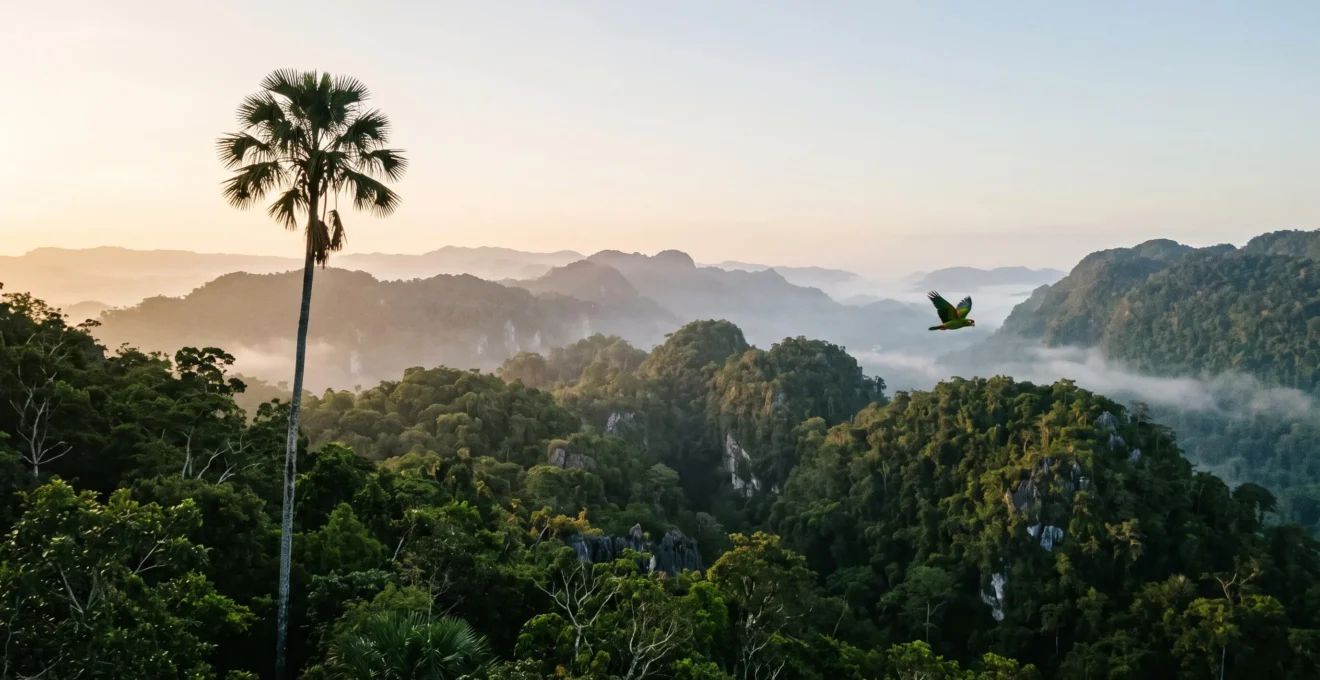
The secret to an authentic Dominican wildlife trip isn’t luck; it’s understanding the island’s unique ecology and making deliberate, ethical choices.
- Hispaniola’s isolation created an evolutionary hotspot, with ecosystems ranging from misty cloud forests to coastal karst rainforests, each with its own specialists.
- Your choice of a certified eco-guide is the single most important factor in protecting fragile habitats and ensuring your spending directly supports conservation.
Recommendation: Start by identifying one « gateway endemic, » like the Palmchat, in a protected area near your base, and use a licensed guide to explore deeper from there.
For many UK travellers, the Dominican Republic conjures images of pristine white sands, turquoise waters, and sprawling all-inclusive resorts. While this picture isn’t wrong, it’s profoundly incomplete. Beyond the sun loungers and cocktails lies a « second » Dominican Republic: an ecological treasure chest, a land of soaring mountains and verdant rainforests that holds one of the most unique collections of wildlife in the Caribbean. This is the island of Hispaniola, an evolutionary laboratory where time and isolation have crafted species found nowhere else on Earth.
Most travel advice stops at listing a few national parks. But for the nature-conscious traveller, this isn’t enough. You want to know *why* this island is so special, *where* to find these elusive creatures ethically, and *how* your visit can be a force for good, not harm. You sense there’s a deeper experience available, one that connects you to the soul of the island and contributes to its protection. This guide moves beyond the surface. We’ll explore the ecological forces that shaped Hispaniola’s biodiversity and provide a practical framework for turning your trip into a genuine ecotourism adventure, where every choice you make helps preserve the very wonders you’ve come to see.
This article provides a roadmap for the conscious explorer. We will delve into the specific ecosystems that shelter the island’s most precious wildlife, compare key destinations for deep rainforest immersion, and reveal how to make choices that directly support vital conservation efforts on the ground. Prepare to discover a side of the Dominican Republic that few get to see.
Summary: Your Guide to Hispaniola’s Rainforest Wildlife
- Why Does Hispaniola Have More Endemic Species Than Other Caribbean Islands?
- Los Haitises or Cordillera Central: Which Offers Deeper Rainforest Exploration?
- Which Endangered Dominican Species Can You Ethically Observe in the Wild?
- The Ecotourism Mistake That Harms 30% of Dominican Rainforest Trails
- When Are Hispaniola’s Rainforest Trails Driest and Safest to Navigate?
- How to Visit Los Haitises or Cordillera Central Mahogany Reserves Legally?
- Where Can You Reliably Spot Palmchats Near Punta Cana or Santo Domingo?
- Where Can You Ethically Encounter Centuries-Old Mahogany Trees in the Dominican Republic?
Why Does Hispaniola Have More Endemic Species Than Other Caribbean Islands?
The incredible biodiversity of Hispaniola isn’t an accident; it’s a direct result of geology and time. The island is an « evolutionary laboratory » primarily due to its profound isolation and complex topography. Unlike continental landmasses, islands act as natural quarantine zones. Species that arrived millions of years ago, perhaps on floating debris or by air, found themselves in a new world with unique challenges and opportunities. With no genetic input from their mainland cousins, they began to evolve on their own distinct paths. This process, repeated over millennia, has resulted in a staggering level of endemism; a peer-reviewed biodiversity study found that more than 42% of its plant species are endemic, meaning they exist here and nowhere else on the planet.
But isolation is only half the story. Hispaniola’s varied landscape, with its five distinct mountain ranges, including the highest peaks in the Caribbean, created a multitude of micro-habitats. From misty cloud forests to dry coastal plains, each zone presented a different set of environmental pressures. A classic example of this is the adaptive radiation of Anolis lizards. Researchers have observed that these lizards diversified independently on Hispaniola, evolving into distinct « ecomorphs. » Some species adapted to live in the canopy, others on tree trunks, and still others in the leaf litter on the ground. This means that multiple, related species can coexist in the same small area by simply not competing for the exact same resources. This principle of habitat specialization is the engine of Hispaniola’s biodiversity, creating a rich tapestry of life in a relatively small area.
Los Haitises or Cordillera Central: Which Offers Deeper Rainforest Exploration?
When seeking true rainforest immersion, two names constantly emerge: Los Haitises National Park and the Cordillera Central mountain range. They represent two fundamentally different, yet equally captivating, Dominican ecosystems. The choice between them depends entirely on the kind of wilderness you wish to explore. Los Haitises is a journey into water and stone; a unique coastal karst landscape where a maze of mangrove-lined canals winds between dozens of small, conical hills (or « mogotes ») draped in lush, humid forest. It’s a low-lying, wet environment that feels prehistoric. Spanning 826 km², it receives over 2,000mm of annual rainfall, creating a haven for water-loving species. A field report documented over 700 plant species and 110 species of birds here, making it one of the country’s richest wildlife-viewing destinations, reachable almost exclusively by boat.
In stark contrast, the Cordillera Central offers a journey into altitude and air. This is the « Dominican Alps, » home to Pico Duarte, the Caribbean’s highest peak. Exploration here means high-altitude trekking through dense broadleaf and pine cloud forests, often shrouded in mist. The air is cooler, the terrain is rugged, and the experience is about endurance and mountain vistas. While Los Haitises’ wildlife is often spotted from the water, the Cordillera Central demands you earn your sightings on foot, listening for the calls of endemic birds echoing through the valleys. The ecosystems are dramatically different, from the flora to the types of insects and amphibians you’ll find.
As the image illustrates, the decision is between the mysterious, water-world of Los Haitises’ karst formations and the epic, high-altitude wilderness of the Cordillera Central. For birders and those fascinated by coastal ecosystems, Los Haitises is unparalleled. For serious hikers and those seeking the solitude of the mountains and the unique life found in cloud forests, the Cordillera Central is the ultimate destination.
Which Endangered Dominican Species Can You Ethically Observe in the Wild?
The term « endangered species » often suggests animals that are impossible to see. However, in the Dominican Republic, ecotourism is becoming a vital tool in their survival, creating opportunities for ethical observation. The poster child for this success is the Ridgway’s Hawk (Gavilán de la Hispaniola), once one of the most critically endangered raptors in the world. Thanks to intensive conservation efforts, particularly around Los Haitises National Park, its story is now one of hope. Conservation monitoring confirms that targeted programs have helped restore the population to 28 breeding pairs with over 130 wild fledglings by 2023 in the Punta Cana region alone. Visiting the area with a certified guide who supports these conservation projects means your tourist dollars are directly funding the hawk’s survival. Ethical observation involves using binoculars, keeping a respectful distance, and hiring local guides who understand nesting sites and behaviours without causing disturbance.
This link between tourism and conservation is not accidental; it’s a deliberate strategy. A CEPF-supported initiative around Los Haitises demonstrates this perfectly. The project not only funds nest monitoring but also hires local women as « Conservation Fellows » to run environmental education in their communities. This approach, combining economic opportunity through ecotourism (like biodiversity-friendly coffee farms) with education, directly tackles the root causes of the hawk’s decline. By choosing to participate in this ecosystem of conservation, travellers become active partners. Other ethically observable endemics include the Hispaniolan Woodpecker and the Broad-billed Tody, often seen on guided walks in protected areas like the Sierra de Bahoruco or the Cordillera Central.
The lack of knowledge, the lack of environmental education in those communities, together with the human persecution have been crucial for the decline of the species.
– Carlos Suarez, Critical Ecosystem Partnership Fund (CEPF), ‘Raptors and Resilience’
The Ecotourism Mistake That Harms 30% of Dominican Rainforest Trails
The most common and damaging mistake a well-intentioned ecotourist can make has nothing to do with littering. It’s the seemingly innocent choice of an uncertified or unqualified guide. While it may seem like a way to save money, hiring someone without proper training and accreditation is the leading cause of trail degradation and wildlife disturbance. A certified eco-guide is more than just a person who knows the way; they are a trained naturalist, a conservationist, and a steward of the environment. They understand the concept of « Leave No Trace, » which includes sticking to designated paths to prevent trail widening and soil erosion, a major problem in humid rainforest climates. Unregulated foot traffic tramples delicate undergrowth, compacts the soil so it can’t absorb water, and ultimately destroys the habitat for insects and ground-dwelling creatures.
The difference in expertise is profound. A field biologist with 17 years of experience in the Sabana de la Mar region became the first local to be certified by the Ministry of Tourism as a National Guide precisely because of his deep ecological knowledge. He had worked directly on nest monitoring, telemetry, and trail construction for the Ridgway’s Hawk program. This is the level of expertise you are supporting when you hire a certified professional. They know the exact distance to keep from a nesting bird, how to interpret animal behaviour to avoid causing stress, and how to manage a group to minimize its physical impact on the environment. They are the front line of defence for these fragile ecosystems. Choosing an uncertified operator often means supporting a business model that prioritizes volume over sustainability, leading directly to the kind of damage seen on overused trails.
This image of exposed roots and compacted earth isn’t just dirt; it’s a scar on the ecosystem. It represents a loss of habitat and a disruption of the delicate forest floor, often caused by tour groups being led off-trail or on poorly maintained paths. A certified guide is trained to prevent this exact scenario.
Your 5-Point Checklist for Choosing an Ethical Guide:
- Verify Certification: Ask to see their official Ministry of Tourism guide license (Carnet). A legitimate eco-guide will be proud to show it.
- Inquire About Group Size: Ask about their maximum group size. Responsible operators keep groups small (typically under 10) to minimize impact and improve the experience.
- Discuss Their Conservation Link: Ask if a portion of their fee goes to a local conservation project or park fund. The best guides have a direct link to preservation efforts.
- Check Their Knowledge: During your initial conversation, ask a specific question about an endemic species. A passionate, knowledgeable guide’s answer will be detailed and enthusiastic.
- Review Their Online Presence: Look for reviews that mention « respect for wildlife, » « educational, » and « sustainable practices, » not just « fun » or « cheap. »
When Are Hispaniola’s Rainforest Trails Driest and Safest to Navigate?
The simple answer to « when is the dry season? » is generally from December to April. This period sees less rainfall across the island, making trails less muddy, rivers easier to cross, and the risk of hurricanes non-existent. For general travel and for exploring many of the country’s national parks, this is undoubtedly the most comfortable and safest time to plan a hiking trip. However, for the savvy traveller, this simple answer hides a more interesting ecological reality. Hispaniola’s complex geography has created a phenomenon known as a « rain shadow, » which offers dry-trail opportunities year-round if you know where to look.
The tall peaks of the Cordillera Central block moisture-laden winds coming from the northeast. As the air rises over the mountains, it cools and releases its rain, drenching the northern and eastern slopes. By the time this air descends on the other side, it is dry, creating a large arid or semi-arid region in the west and southwest of the country. These are Hispaniola’s dry forests, a completely different and often overlooked ecoregion. Ecological mapping shows that these dry forests cover nearly 15,123 km², or about 20% of the island. Areas like the Jaragua National Park or the surroundings of Lago Enriquillo have a desert-like climate, with unique, drought-resistant flora and fauna, including cacti and the endangered Ricord’s and Rhinoceros Iguanas. So, if you’re travelling during the « wet » season (May to November), you can still find fantastic, dry hiking by heading to the island’s rain shadow in the southwest. This allows for year-round exploration, provided you match your destination to the season.
How to Visit Los Haitises or Cordillera Central Mahogany Reserves Legally?
Accessing the Dominican Republic’s most precious natural areas, like the rainforests of Los Haitises or remote mahogany reserves, is not a matter of simply showing up. Legal access is intrinsically tied to regulated ecotourism, a system designed to manage visitor impact and generate funds for conservation. The primary rule is to always go through official channels. For a national park like Los Haitises, this means booking a tour with a licensed operator, usually departing from a designated access point like Sabana de la Mar. The park was established by law in 1976, and its administration manages all tourism activities. This regulated system ensures that visitor numbers are controlled, boats follow specific routes to avoid disturbing bird colonies, and a portion of your fee contributes to the park’s upkeep, including ranger salaries and scientific monitoring.
Attempting to enter these areas « informally » with an unlicensed guide is not only illegal but also directly undermines the conservation model. These informal tours often bypass park fees, pay no taxes, and have no accountability for the environmental damage they may cause. For reserves in the Cordillera Central, which can be more remote, the principle is the same. Access is typically managed through the Ministry of Environment and Natural Resources (Ministerio de Medio Ambiente y Recursos Naturales). The safest and most responsible way to visit is to hire a reputable, certified ecotourism company that has the necessary permits and relationships with the park authorities. They will handle all the logistics, ensure your visit is compliant with local regulations, and provide a trained naturalist guide who can enrich your experience while safeguarding the environment. Legal access is synonymous with ethical and sustainable access.
Where Can You Reliably Spot Palmchats Near Punta Cana or Santo Domingo?
For travellers based in the bustling tourist hubs of Punta Cana or Santo Domingo, the idea of trekking into a remote mountain range can seem daunting. But you don’t have to go far to encounter one of Hispaniola’s most fascinating endemic species. The Palmchat (Cigua Palmera), the national bird of the Dominican Republic, is the perfect « gateway endemic. » It’s unique to the island, socially complex, and remarkably accessible. These birds are famous for building enormous, communal nests in the crowns of Royal Palms, structures that can house dozens of families in separate « apartments. » And one of the most reliable places to see them near the country’s main tourist entry point is the Puntacana Ecological Foundation.
This private reserve is a model of accessible conservation. The foundation was established on over 600 hectares of donated land in 1994 and serves as a centre for research, conservation, and environmental education. It features a network of well-maintained trails, including the « Hawk Trail, » that lead visitors through a patch of restored coastal forest to a bird observation tower. This is a prime location for spotting Palmchats going about their busy lives, often alongside other endemics like the Hispaniolan Woodpecker and the colourful Broad-billed Tody. A guided tour here provides a fantastic, low-impact introduction to the island’s birdlife without requiring a multi-day expedition. Similarly, the National Botanical Garden (Jardín Botánico Nacional) in Santo Domingo is another excellent, easily accessible location where the palm trees are often home to large, active Palmchat communities. These locations prove that a meaningful wildlife encounter doesn’t always require a journey to the ends of the earth.
Key takeaways
- Hispaniola’s unique biodiversity is a product of its geological isolation and diverse mountain topography, creating numerous micro-habitats for species to evolve in.
- The most critical decision an ecotourist can make is choosing a certified guide; this single choice directly impacts trail preservation, wildlife welfare, and the local conservation economy.
- Ethical wildlife viewing is an active partnership; your spending on licensed tours and in protected areas provides the financial foundation for successful conservation stories like the Ridgway’s Hawk recovery.
Where Can You Ethically Encounter Centuries-Old Mahogany Trees in the Dominican Republic?
After exploring the dynamic worlds of birds and lizards, the final chapter of a deep dive into Hispaniola’s nature is often a quieter, more contemplative one: standing in the presence of ancient trees. The West Indian Mahogany (Caoba) is the national tree of the Dominican Republic, a species whose precious wood has shaped history and, tragically, led to its own rampant deforestation. Today, encountering a truly ancient, centuries-old specimen is a rare privilege, an experience reserved for those willing to venture into the island’s most protected and often remote reserves. These living monuments are not found in easily accessible tourist spots but are sheltered deep within national parks, particularly in the high-altitude cloud forests of the Cordillera Central or the remote Sierra de Bahoruco.
An ethical encounter with these giants is, by definition, a guided one. These trees are often located off-trail in protected scientific reserves, and access is strictly controlled to prevent soil compaction around their sensitive root systems. A specialised ecotourism outfitter working with the Ministry of Environment is your only legitimate path. The journey itself becomes part of the experience—a multi-hour hike or mule ride into the forest’s core, culminating not in a « sight » but in a profound encounter. Standing before a tree that was a sapling during the time of Columbus, its massive buttressed roots anchoring it to the earth, is a powerful reminder of nature’s endurance and fragility. It’s a humbling experience that re-contextualizes the importance of preserving these last wild places.
This is the ultimate reward for the conscious traveller. It’s not just about seeing a big tree; it’s about understanding what it represents—a survivor, a genetic reservoir, and a silent testament to the wild heart of Hispaniola that still beats strong in these protected pockets. This quiet, respectful pilgrimage is the very essence of ecotourism.
Your journey into the wild heart of the Dominican Republic begins not with a flight, but with a choice. By choosing to look beyond the beaches, to seek out certified local experts, and to travel with curiosity and respect, you transform your holiday into a meaningful contribution to conservation. You become part of the story of a resilient island and its unique inhabitants. Start planning your own conscious journey by researching certified ecotourism operators in these key regions and prepare to be amazed by the real Dominican Republic.