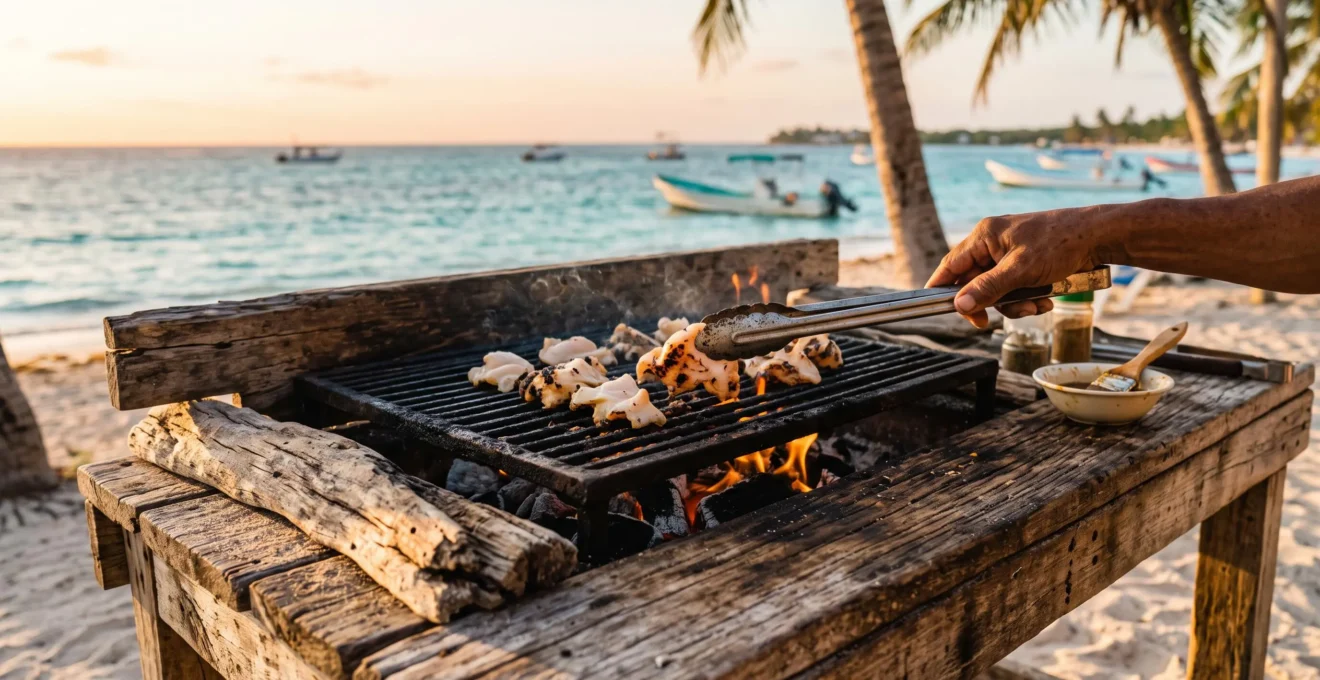
The secret to tender Dominican lambí isn’t the recipe; it’s the non-negotiable physical and chemical preparation technique that most tourist spots tragically skip.
- True tenderness comes from mechanically pounding the dense muscle fibres before a long, acidic marinade.
- The best marinades use sour orange or lime, as citric acid is chemically superior for tenderizing this specific type of protein.
Recommendation: Before ordering, ask if the lambí is pounded (`majado`) and always avoid ordering it during the summer conservation ban (`veda`) from July 1st to October 31st.
For any seafood lover visiting the Dominican Republic, the promise of grilled lambí (conch) is intoxicating. You envision a smoky, tender delicacy fresh from the Caribbean Sea, a true taste of the island. Yet, a common warning often follows this dream: « Be careful, it can be tough and rubbery. » Many visitors leave with the disappointing confirmation that conch is just a chewy, unyielding meat, a culinary experience that fails to live up to its reputation.
But what if that infamous toughness isn’t an inherent feature of conch, but a direct failure of preparation? The truth is, that rubbery texture is a clear sign of a kitchen taking shortcuts. The difference between a tough, tire-like piece of lambí and one that is firm yet sublimely tender lies in a specific, multi-step process that honours the unique biology of the meat. It’s a combination of mechanical force and chemical science that many high-volume beach shacks and tourist restaurants simply ignore for the sake of speed.
This guide pulls back the curtain on the secrets of authentic Dominican lambí. We will move beyond generic advice and delve into the textural science of why conch becomes tough and how expert local cooks prevent it. You will learn to identify the key ingredients in a proper marinade, understand the critical difference between preparation methods, and even learn how to spot fresh-off-the-grill lambí from a reheated imposter. By the end, you won’t just be hoping to find good lambí; you’ll be equipped with the knowledge to demand it.
To help you navigate this culinary quest, this article breaks down every essential aspect of finding the perfect lambí. Follow this guide to transform your experience from a game of chance into a guaranteed delicacy.
Summary: The expert’s guide to perfect grilled lambí
- Why does grilled conch turn rubbery at most tourist restaurants?
- What ingredients create the classic Dominican grilled lambí marinade?
- Grilled or fried lambí: Which Dominican preparation is more tender?
- The lambí consumption dilemma where demand threatens Caribbean populations
- How to tell if beachside lambí was grilled fresh or reheated?
- Why do some Dominican beaches have brown water while others are turquoise?
- Which Dominican street foods are most likely to cause stomach problems?
- Which Dominican beaches deliver authentic turquoise waves without tourist traps?
Why does grilled conch turn rubbery at most tourist restaurants?
The primary reason grilled conch turns into a rubbery disappointment is a fundamental misunderstanding—or deliberate ignoring—of its biology. Unlike fish or even squid, conch meat is a single, massive muscle that is incredibly dense with tightly-packed collagen and muscle fibres. When heat is applied rapidly, these fibres contract and seize up, resulting in the tough, chewy texture that so many travellers unfortunately experience. It is not a sign of being undercooked or overcooked; it is a sign of being *unprepared*.
To counteract this, authentic Dominican preparation is a non-negotiable, multi-step process focused on breaking down these fibres *before* the conch ever touches the grill. Skipping even one of these steps guarantees a tough result. The most critical and most frequently omitted step is the mechanical tenderizing. Without this, no amount of marinating or skillful grilling can save the texture.
The entire process is a craft, and when done correctly, it transforms the conch from a potential rubber band into a firm, abalone-like steak. The essential steps are as follows:
- Step 1 – Clean: The tough outer skin and internal organs are meticulously removed, leaving only the firm, white muscle meat. This is the foundation for a clean flavour.
- Step 2 – Tenderize: This is the most crucial part. The meat is either pounded vigorously with a mallet, scored in a fine crosshatch pattern, or sometimes tenderized in a pressure cooker. This mechanical action physically shatters the dense muscle fibres, making them unable to seize up when cooked.
- Step 3 – Match the cook to the prep: Only after being properly pounded can the meat handle the quick, high-heat searing of a grill (`a la plancha`). For cuts that are less tenderized, a slow braise or stew (`guisado`) is the only way to achieve tenderness over a longer cooking time.
When you encounter tough lambí, it’s almost certain that the kitchen skipped the laborious second step, rushing a poorly prepared piece of meat onto the grill to meet tourist demand.
What ingredients create the classic Dominican grilled lambí marinade?
Once the conch has been mechanically tenderized, the next stage is a chemical one: the marinade. A classic Dominican lambí marinade serves two purposes: to impart the signature zesty, savoury flavour of the island and to continue the tenderizing process on a microscopic level. The star ingredient is always a powerful acid, which works to denature and unravel the proteins that the mallet started to break down.
The most prized acidic agent is sour orange (`naranja agria`), a staple in Dominican kitchens. Its complex, slightly bitter citrus notes are a perfect flavour match for the sweet, oceanic taste of conch. When sour oranges are not available, fresh lime juice is the go-to substitute. This reliance on citrus is no accident; comparative research on marinade acids shows that citric acid from fresh citrus often outperforms the acetic acid found in vinegar for this type of protein breakdown, leading to a more tender result without imparting a harsh, pickled flavour.
While the acid does the heavy lifting for texture, the flavour profile is built with a simple but potent combination of aromatics. This typically includes finely minced garlic, diced onions, bell peppers (often a mix of colours), and chopped cilantro or parsley. A touch of oregano and a drizzle of vegetable oil to bind it all together completes the classic mixture. The conch is left to soak in this marinade for at least an hour, but often longer, allowing the flavours to penetrate deeply into the scored meat.
Understanding the different ways marinades can tenderize meat reveals why the Dominican acidic method is so well-suited for the tough protein structure of conch.
| Tenderizing Agent | Mechanism | Best Use | Risk |
|---|---|---|---|
| Acidic (sour orange, lime, vinegar) | Denatures and unravels muscle proteins, partially dissolving collagen | Tough proteins like conch that need controlled, gradual tenderizing | Low risk of over-tenderizing, even with longer exposure |
| Enzymatic (papaya, pineapple) | Enzymes such as papain and bromelain actively break down protein structure | Fast tenderizing when time is limited | High risk of turning the meat mushy if left too long |
Ultimately, a good marinade is a sign of a kitchen that respects tradition. If the lambí you are served tastes primarily of the sea with a bright, garlicky citrus finish, you are on the right track.
Grilled or fried lambí: Which Dominican preparation is more tender?
When choosing how to have your lambí prepared, you’ll often face a choice between grilled (`a la plancha`) and fried (`chicharrón de lambí`). While both can be delicious, they offer very different textural experiences, and one is far more « forgiving » of imperfect preparation than the other. For a purist seeking the true texture of expertly handled conch, grilling is the ultimate test.
Grilled lambí exposes the meat directly to high heat with minimal interference. There is nothing to hide behind. If the conch was not meticulously pounded and marinated, the grilling process will immediately turn it into a rubbery slab. However, when prepared correctly, `a la plancha` is sublime. The texture is firm and satisfyingly chewy, often compared to abalone or a very firm scallop, with a smoky char on the outside that gives way to a tender, juicy interior. This method allows the pure, sweet flavour of the conch, enhanced by the light marinade, to be the star.
On the other hand, fried lambí involves coating small pieces of conch in a seasoned batter and deep-frying them until golden and crispy. This method is incredibly popular as a social snack, often served with a cold beer. The hot oil and crunchy coating provide a significant advantage: they can mask minor toughness in the meat. The crispy exterior provides a textural contrast that makes any interior chewiness less noticeable. This makes `chicharrón de lambí` a much safer bet at a restaurant you’re unsure about, as its « forgiveness level » is high. While delicious, it is less of a test of the chef’s skill in tenderizing the raw product.
The following table breaks down the key differences for the discerning diner.
| Preparation | Texture Outcome | Forgiveness Level | Best For |
|---|---|---|---|
| Grilled (a la plancha) | Firm and chewy, often compared to abalone when properly tenderized | Low — poor tenderizing technique is immediately obvious | Tasting the pure, unmasked flavor of the conch itself |
| Fried (chicharrón de lambí) | Crisp batter exterior can mask minor toughness in the meat underneath | High — hot oil and coating compensate for imperfect tenderizing | A crunchy, social snack rather than a delicate tasting dish |
In short, if you want to truly assess the quality of the conch and the skill of the kitchen, order it grilled. If you want a delicious and reliable crunchy snack, the fried version is an excellent choice.
The lambí consumption dilemma where demand threatens Caribbean populations
Enjoying lambí as a traveller comes with a responsibility to understand its precarious position in the Caribbean ecosystem. The queen conch is not just a delicacy; it is a vital species that has faced immense pressure from overfishing due to its popularity. This high demand has led to a significant decline in its populations across the region, a problem so severe that in early 2024, NOAA Fisheries listed the queen conch as threatened under the Endangered Species Act. This official designation underscores the urgent need for sustainable consumption practices.
In the Dominican Republic, the government has implemented a crucial conservation measure known as the `veda` (closed season). This annual ban prohibits the fishing, selling, and consumption of conch to allow the species time to reproduce and replenish its numbers. This ban is the single most important rule for a responsible tourist to know.
Beyond observing the `veda`, travellers can make other informed choices to ensure their consumption supports sustainability and local communities rather than unregulated or illegal harvesting. Being a conscious consumer helps protect this cultural and ecological treasure for future generations.
Responsible lambí checklist for travelers
- Know the veda: selling and fishing lambí is banned in the Dominican Republic from July 1 to October 31 every year — avoid ordering it during this window.
- Inspect the shells on display: large, mature shells indicate legal-size harvest, while a stall selling mostly small shells is a red flag.
- Ask if it’s ‘del país’ (locally caught) to support small-scale Dominican fishing communities over unregulated supply chains.
- Observe restaurant practices: a restaurant that openly serves lambí during the ban is showing a clear disregard for local laws and sustainability.
- Consider alternatives: during the veda, explore other sustainable Dominican seafood options like mahi-mahi (dorado) or red snapper (chillo).
By making these conscious choices, you can enjoy this iconic Dominican dish while contributing to its long-term survival.
How to tell if beachside lambí was grilled fresh or reheated?
At a busy beachside shack, the temptation to pre-cook and reheat popular items is high. For lambí, this is a death sentence for texture, as it inevitably becomes tougher and drier with each reheating. As a savvy diner, you can use your senses to distinguish a freshly grilled plate from a sad, reheated one. The key is to look for signs of vibrancy and life that are absent in food that has been sitting around.
First, use your eyes. Freshly grilled lambí will have distinct, well-defined char marks from the grill grates. These marks will vary slightly in colour, from dark brown to almost black, against the pale meat. Reheated lambí, on the other hand, often has uniform, dull brown colouring or patchy, dried-out char marks. More importantly, freshly cooked meat will glisten with natural juices. If the meat looks dull, dry, or matte, it’s a major red flag that it has been sitting under a heat lamp or was zapped in a microwave.
Next, listen and smell. When you are near the stall or restaurant, you should hear the sizzle of meat hitting a hot grill. A quiet kitchen during a busy period might indicate that food is simply being reheated. The air should also carry the smoky, aromatic scent of the char and the garlic from the marinade. A lack of these fresh cooking smells is a warning sign.
Finally, the ultimate test is temperature. When the plate arrives, the lambí should be consistently hot throughout. Reheated food, especially if done improperly, often suffers from uneven temperatures—scalding hot on the outside but only lukewarm in the centre. A piece of lambí that is uniformly and freshly hot is almost always a sign that it came straight off the `plancha` for you.
Trust your instincts. If a dish doesn’t look or feel vibrant and freshly made, it probably isn’t. It’s better to walk a little further down the beach to find a place that cooks to order.
Why do some Dominican beaches have brown water while others are turquoise?
The iconic image of the Dominican Republic is one of pristine, turquoise water lapping against white sand beaches. However, visitors are sometimes surprised to find that the water at certain beaches can appear brown or murky. This variation is not a sign of pollution but rather a natural result of the island’s diverse geography and river systems.
The breathtaking turquoise colour is a product of light and purity. It occurs in areas with white sand, typically made from coral fragments. When sunlight penetrates the clear, shallow water, the sand reflects the blue and green light spectrum back to the surface, creating that brilliant hue. These areas are usually protected by offshore coral reefs that buffer the coast from strong waves and prevent sediment from being churned up.
In contrast, brown or darker water is almost always found near the mouth of a river or a large stream (`una desembocadura`). The Dominican Republic has numerous rivers that flow from its mountainous interior down to the coast. These rivers carry with them a heavy load of sediment—silt, soil, and organic matter—from the land. When this freshwater, rich in dark sediment, meets the clear saltwater of the ocean, it creates a plume of brownish water that can extend for some distance along the coast before it disperses.
This phenomenon is perfectly natural and is a sign of a healthy, functioning ecosystem where the land and sea are interconnected. Beaches located in or near these river estuaries will not have the postcard-perfect turquoise water, but they often host unique mangrove ecosystems and are important habitats for birdlife and juvenile fish.
So, if you encounter brown water, you are likely witnessing the meeting point of a river and the ocean—a different, but equally authentic, Dominican landscape.
Which Dominican street foods are most likely to cause stomach problems?
Dominican street food is a vibrant and delicious part of the culture, but for a visitor with an unaccustomed stomach, some choices carry a higher risk than others. The likelihood of getting sick usually comes down to two factors: the ingredients used and the food’s temperature and handling. Being mindful of these can help you enjoy the experience without any unpleasant after-effects.
The riskiest items are often those that contain mayonnaise-based sauces or uncooked vegetables that have been sitting out in the tropical heat. A prime example is the classic `chimi` burger. While delicious, the cabbage salad and pink sauce that top it can be a breeding ground for bacteria if not kept properly chilled. Similarly, be cautious with `pico de gallo` or other fresh salsas at stands where there is no visible refrigeration.
Another category to approach with care is pre-prepared food that is not kept piping hot. Fried items like `quipes` or `empanadas` are safest when you see them being taken directly out of the hot oil. If they are sitting in a lukewarm display case, it’s best to pass. The same rule applies to stewed meats or rice dishes sold from large pots; they should be steaming hot, indicating a temperature high enough to keep bacteria at bay.
To stay safe, follow this simple rule: opt for food that is cooked to order in front of you. Look for stands that are busy with a high turnover of customers, as this means the food is constantly being replenished and hasn’t been sitting for long. Skewers (`pinchos`) grilled over hot coals, fresh-off-the-grill `chimi` patties (you can ask for it without the sauce), and piping hot fried snacks are generally your safest and most delicious bets.
Ultimately, a little common sense goes a long way. If a food stand doesn’t look clean or the food doesn’t look fresh and hot, trust your gut and find another option.
Key takeaways
- Real lambí tenderness is achieved through mechanical pounding or scoring to break down muscle fibres, a step often skipped at tourist traps.
- An authentic marinade uses the power of citric acid from sour orange or lime to chemically tenderize the meat, not just flavour it.
- To eat responsibly, always respect the annual conservation ban (`veda`) on conch, which runs from July 1st to October 31st.
Which Dominican beaches deliver authentic turquoise waves without tourist traps?
The quest for the perfect grilled lambí is much like the search for the perfect Dominican beach. The most famous, heavily marketed spots are often crowded and can offer a diluted, mass-market version of the authentic experience. Just as a tourist-trap restaurant might serve you tough, reheated lambí, a packed tourist beach can lose the tranquil, pristine magic you were seeking. The real treasures, for both food and scenery, are often found just a little off the beaten path.
Finding an authentic beach experience means looking for the same signs of quality you now know to look for in your food: simplicity, respect for nature, and local character. It might be a beach like Playa Rincón or Playa Frontón in the Samaná peninsula, where the stunning turquoise water is the main event, and the facilities are simple shacks run by locals who cook fresh fish to order. Or it could be Bahía de las Águilas in the south, a protected paradise where the natural beauty is fiercely preserved and completely untouched by mass tourism.
These places deliver on the promise of turquoise waves and authentic Dominican spirit. They remind you that the best experiences aren’t always the most convenient. They require a bit more effort, a bit more knowledge, and a willingness to look beyond the obvious. This is as true for finding a secluded cove as it is for finding a chef who takes the time to properly pound and marinate his lambí.
Now that you are equipped with the expert knowledge to distinguish authentic, tender lambí from the tourist traps, the next step is to confidently explore the Dominican coast and put your new skills to the test on your next trip.