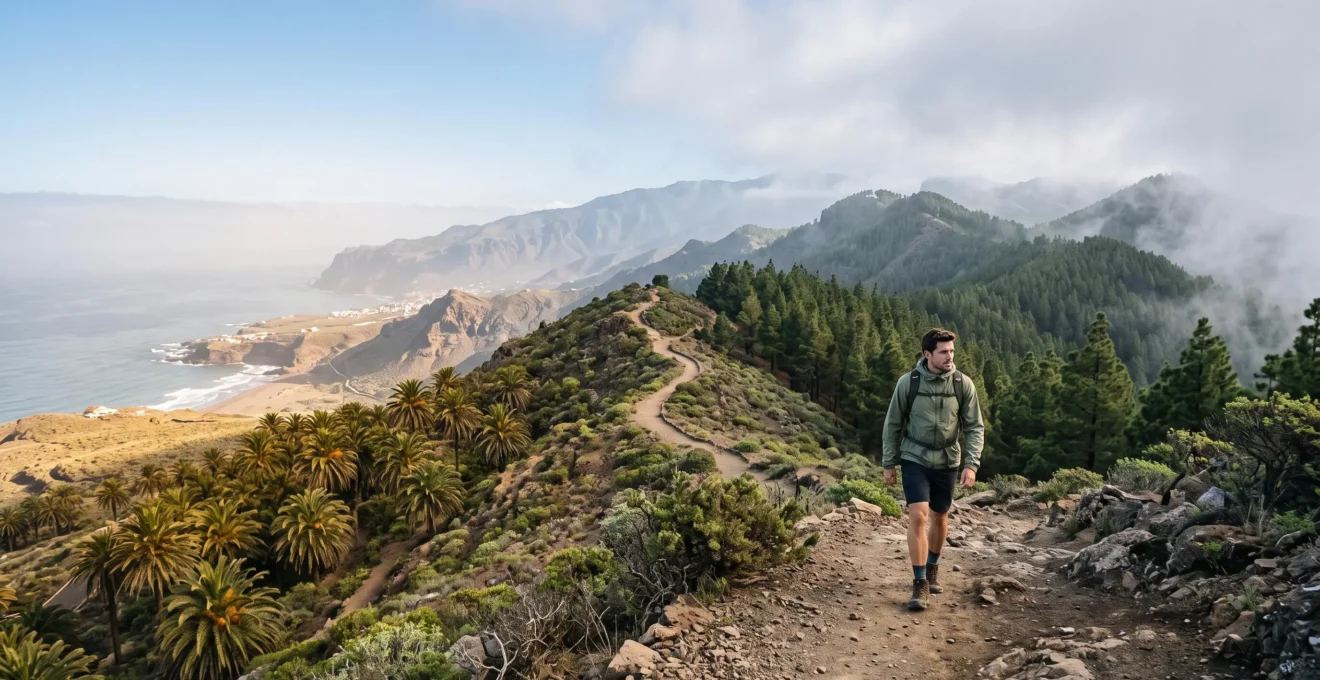
Jarabacoa offers the perfect climatic antidote to a Dominican beach holiday, transforming it from a simple sun-and-sand getaway into a complete, multi-sensory island experience.
- The mountain town’s high altitude provides a refreshing 8-10°C drop in temperature, offering a natural escape from the intense coastal heat and humidity.
- It provides a range of « accessible adventures, » from gentle waterfall hikes to beginner-friendly white-water rafting, allowing you to experience the island’s wild heart without being an extreme athlete.
Recommendation: Instead of just booking another day at the beach, dedicate at least one overnight stay in Jarabacoa to reset your senses and discover the stunning geographic diversity of the Dominican Republic.
For many UK travellers, the Dominican Republic is a singular vision: miles of white sand, turquoise water, and the gentle sway of palm trees under a reliably hot sun. Your itinerary is likely built around the celebrated beaches of Punta Cana or Puerto Plata, and for good reason. But after several days of intense heat and humidity, even the most dedicated sun-worshipper can feel a sense of fatigue. The constant sizzle of the sun and the salty air, while glorious, can become one-dimensional.
What if the key to a truly unforgettable Dominican holiday wasn’t just finding the best beach, but finding its perfect counterpoint? This is where Jarabacoa, nestled high in the Cordillera Central mountains, changes the entire equation. It’s not simply an « alternative » to the coast; it’s a strategic and essential climatic antidote. The secret lies in understanding how to use its cool, crisp air and lush, green landscapes as a deliberate sensory reset, adding a rich layer of geographic diversity that most visitors miss entirely. This guide isn’t about convincing you to skip the beach. It’s about showing you how a short detour into the mountains can make you appreciate the coast even more.
In this guide, we will explore how Jarabacoa provides this unique contrast. We’ll examine the science behind its cool climate, compare its most popular activities for the curious traveller, and provide the practical advice needed to seamlessly integrate this mountain escape into your beach-centric itinerary.
Summary: Why Should Beach-Focused Travellers Visit Jarabacoa’s Mountain Trails?
- Why Is Jarabacoa 8°C Cooler Than Punta Cana Despite Being in the Same Country?
- Salto de Jimenoa or Salto de Baiguate: Which Jarabacoa Waterfall Is Worth Hiking?
- How to Book Jarabacoa White-Water Rafting for First-Time Rafters?
- The Jarabacoa Timing Mistake That Turns Trails Into Muddy Rivers
- Should You Day-Trip to Jarabacoa From the Coast or Stay Overnight?
- Why Does Pico Duarte’s Altitude Cause Breathlessness Even for Fit Hikers?
- Los Haitises or Cordillera Central: Which Offers Deeper Rainforest Exploration?
- What Fitness Level Do You Realistically Need to Summit Pico Duarte?
Why Is Jarabacoa 8°C Cooler Than Punta Cana Despite Being in the Same Country?
The primary reason Jarabacoa acts as the island’s natural air conditioner is simple: altitude. While coastal resort towns like Punta Cana sit at sea level, Jarabacoa is perched at an elevation of over 500 metres (1,700 feet) in the heart of the Cordillera Central, the highest mountain range in the Caribbean. This elevation triggers a phenomenon known as adiabatic cooling, where air cools as it rises. For every 100 metres you ascend, the temperature typically drops by about 1°C. This means the town is naturally, consistently, and refreshingly cooler than the coast.
This isn’t just a minor difference; it’s a complete change of environment. In the peak of summer, when the coast is sweltering, official data confirms the stark contrast. Reports show that the average air temperature in Punta Cana is about 31°C, while Jarabacoa enjoys an average annual temperature of a comfortable 22°C. This 8-10 degree gap is the « altitude relief » that beach travellers crave. It’s the difference between needing constant air conditioning and enjoying a cool mountain breeze through an open window. This climatic contrast is the foundation of Jarabacoa’s appeal, offering a welcome escape from the oppressive humidity of the coast.
As you can see, the landscape transforms as dramatically as the climate. The journey from the coast’s palm and mahogany trees to Jarabacoa’s dense pine forests feels like travelling to another country entirely. This is why it’s known as the « Dominican Alps. » You’re swapping the scent of salt and sun cream for the crisp, clean smell of pine and damp earth—a true sensory reset that rejuvenates you for your return to the beach.
Salto de Jimenoa or Salto de Baiguate: Which Jarabacoa Waterfall Is Worth Hiking?
For a beach traveller dipping their toes into mountain adventure, Jarabacoa’s waterfalls are the perfect starting point. They offer a tangible reward for minimal effort and showcase the region’s lush beauty. The two most famous are Salto de Jimenoa and Salto de Baiguate, but they cater to very different expectations. Choosing the right one depends entirely on the kind of experience you’re after: a dramatic, cinematic photo-op or a relaxed, easy-access nature stop.
Salto de Jimenoa is often considered the more impressive of the two. A visitor once noted that Jimenoa is more « spectacular, » and it’s easy to see why. Cascading from a great height into a rocky gorge, it feels wild and epic. However, this spectacle comes with a more strenuous hike. In contrast, Salto de Baiguate is gentler and more accessible, making it an ideal choice for a quick visit or for those not wanting a challenging trek. The decision between them is a classic trade-off between effort and accessibility.
To make the choice clearer for first-time visitors, here is a breakdown of the key differences based on traveller reports and local guides:
| Waterfall | Access | Difficulty | Best For |
|---|---|---|---|
| Salto de Baiguate | You can get here by car (10 min drive) and a short 15-minute walk. | Easy | Quick, low-effort scenic stop |
| Salto de Jimenoa I | Considered one of the most beautiful hikes, part of the Dominican Alps mountain range; the hike is steep. | Strenuous | Dramatic ‘wow’ payoff, rustic immersion |
| Salto de Jimenoa II | Located within a hydroelectric dam and protected area, perfect for those who can’t hike too much. | Easy | Accessible adventure-park experience |
For the typical beach-goer, Salto de Baiguate or Salto de Jimenoa II are likely the best bets. They deliver the jungle waterfall experience without requiring significant physical exertion, serving as a perfect, low-commitment introduction to the beauty of the Cordillera Central. Salto de Jimenoa I, while stunning, is better reserved for those with a bit more hiking experience and a desire for a more rugged adventure.
How to Book Jarabacoa White-Water Rafting for First-Time Rafters?
White-water rafting on the Yaque del Norte River is Jarabacoa’s signature adventure, but the idea can be intimidating for a first-timer whose most strenuous holiday activity is a walk along the shoreline. The good news is that the main rafting section is perfectly suited for beginners, offering an exhilarating experience without requiring any prior skill. The key to a safe and enjoyable trip is not your athletic ability, but choosing the right tour operator.
A reputable outfitter will handle all the logistics, from equipment to expert guidance. The river itself offers a mix of calm stretches for enjoying the scenery and exciting rapids that provide a thrill. According to adventure guides, operators run trips on a section with Class II–III+ rapids and a trip length of ~2.5–4 hrs, which is the sweet spot for an « accessible adventure. » This class of rapids is exciting enough to get your heart pumping but is widely considered manageable for novices under the supervision of an experienced guide. Your main job is to paddle when told and enjoy the ride.
When booking, focus on vetting the operator rather than worrying about your own experience. A professional company will prioritize your safety and ensure you’re comfortable from start to finish. Here’s a simple checklist to follow:
- Confirm a Safety Briefing: Reputable companies always provide a thorough safety briefing before you even get near the water. They’ll teach you paddling commands and what to do if you fall out of the raft. No experience is necessary because they provide the training.
- Check for Inclusions: A good package includes all necessary equipment (helmet, life vest, paddle), transportation to and from the river, and an experienced, certified guide in each raft.
- Ask About the River Class: Ensure the section of the Yaque del Norte they use is indeed rated Class II-III. This is exciting but appropriate for beginners. Be aware that water levels during the rainy season can make the rapids more intense.
- Choose Established Outfitters: Stick with well-known, highly-reviewed companies like Rancho Baiguate. Their long-standing reputation is built on reliability and safety.
By following these steps, a beach-lover can confidently book a rafting trip, turning a day away from the coast into one of the most memorable parts of their Dominican holiday. It’s the perfect way to experience the wild, untamed heart of the island.
The Jarabacoa Timing Mistake That Turns Trails Into Muddy Rivers
While Jarabacoa offers a cool respite from the coast, that cooler climate is fuelled by one thing: rain. The mountains receive significantly more precipitation than the arid southern coast, and misunderstanding its patterns is the single biggest mistake a visitor can make. Arriving during a peak wet spell can transform idyllic hiking trails into treacherous, slippery streams of mud, ruining the very experience you came for. Unlike the coast’s predictable sun, Jarabacoa’s weather demands respect and planning.
The key is to understand that Jarabacoa has a « drier » season, not a « dry » season. Rain is a possibility year-round, but its intensity varies dramatically by month. According to climate data, annual rainfall is around 1,394 mm (55 in), with May being the wettest month and December the driest. The difference is stark: May sees an average of 223 mm of rain, while December receives only 63 mm. Planning your mountain detour during the drier months (December to March) drastically increases your chances of clear skies and firm trails.
Ignoring this advice can lead to a miserable experience. One visiting hiker recounted their trek on a popular trail after a downpour, noting that « everyone in our group fell in the mud at least once because of how slippery the trail is. » This isn’t an exaggeration; the region’s rich, red soil becomes incredibly slick when wet. Even if you visit in the drier season, it’s wise to pack sturdy walking shoes or hiking boots with good grip instead of the flip-flops you live in at the beach. Also, plan your hikes for the morning, as rain showers often build up in the afternoon.
Should You Day-Trip to Jarabacoa From the Coast or Stay Overnight?
For a traveller based on the coast, the logistics of visiting Jarabacoa boil down to one key question: is it a feasible day trip, or does it demand an overnight stay? While a day trip is technically possible, especially from the northern coast, it completely misses the point of the experience. A rushed in-and-out visit treats Jarabacoa as a simple attraction to be checked off a list, when its true value lies in immersing yourself in its unique atmosphere—something that only reveals itself with time.
The drive times alone argue against a day trip. Rushing from the coast, doing one quick activity, and driving back leaves you exhausted and only gives you a fleeting glimpse of the region. To truly experience the « climatic antidote, » you need to wake up in the mountains. You need to feel the cool, crisp morning air and see the mist clinging to the pine-covered hills. As one travel writer beautifully put it:
Mornings in Jarabacoa start cool and citrus-bright.
– Adventure Collective Travel, Charging the Yaque del Norte: Rafting Jarabacoa’s Mountain River
That « citrus-bright » feeling is what you miss on a day trip. An overnight stay allows you to slow down, enjoy a leisurely dinner at a mountainside restaurant, and wake up naturally without an alarm, fully rested and ready to explore. A single night is enough to completely reset your senses. To help with your planning, here are the realistic driving times from major coastal hubs:
| Departure Point | Distance | Approx. Drive Time | Notes |
|---|---|---|---|
| Santo Domingo | 144 km (89 mi) | ~2h16 by car | Three and a half hours of travel by bus will cost you about US$6. |
| Puerto Plata / Northern Coast | 107 km (66.3 mi) | ~2–2.5h | Nearest beach hub to Jarabacoa |
Considering a round trip from Puerto Plata would eat up 4-5 hours of your day, an overnight stay is the only way to make the journey worthwhile. It transforms the trip from a logistical challenge into a relaxing and restorative mini-holiday within your main holiday.
Why Does Pico Duarte’s Altitude Cause Breathlessness Even for Fit Hikers?
While most visitors to Jarabacoa will stick to lower-altitude trails, the region is also the gateway to the Caribbean’s highest peak: Pico Duarte. Standing at a formidable 3,098 metres (10,164 feet), it presents a unique physiological challenge that often surprises even very fit travellers. The primary culprit is the thin air. At this elevation, the oxygen levels are significantly lower than at sea level, and your body has to work much harder to get the oxygen it needs. This can lead to breathlessness, fatigue, and even mild altitude sickness, regardless of your physical condition.
It’s a common misconception that being « gym-fit » automatically prepares you for high-altitude trekking. As one expert source on the hike explains, physiologically, at over 3,000 meters, some hikers may experience mild symptoms and, crucially, « even fit travelers who run or go to the gym regularly may find hiking at elevation a unique challenge. » Your cardiovascular system might be strong, but it hasn’t been trained to operate efficiently with less oxygen. This is why slow and steady acclimatisation is more important than raw power.
Recognising this challenge is the first step to overcoming it. Successfully summiting Pico Duarte is less about brute force and more about smart preparation and listening to your body. Managing the effects of altitude is a skill, and there are practical steps you can take to mitigate the risks.
Your Action Plan: Managing Altitude on the Pico Duarte Trek
- Acclimatise Before You Ascend: Spend a day or two in Jarabacoa (at 500m) before starting your trek. This gives your body a head start in adjusting to the lower oxygen levels. Don’t go straight from a sea-level beach to the trailhead.
- Pace Yourself Deliberately: This is not a race. Hike at a slow, steady pace, especially on the first day. The « pole pole » (slowly, slowly) mantra of mountaineers applies here. A sustainable pace allows your body to adapt as you climb.
- Hydrate Relentlessly: The dry mountain air and physical exertion can lead to rapid dehydration, which worsens altitude symptoms. Drink plenty of water throughout the day, far more than you think you need.
- Improve Cardiovascular Fitness: Before your trip, focus on endurance activities like running, cycling, or long-distance hiking. A stronger heart and lungs will work more efficiently when oxygen is scarce.
- Know the Warning Signs: Be aware of the early symptoms of altitude sickness: headache, nausea, dizziness, and unusual fatigue. If they become severe, the only cure is to descend to a lower altitude immediately.
By treating the altitude with respect and preparing accordingly, a fit and determined traveller can safely conquer the Caribbean’s highest point, earning an incredible sense of achievement and unparalleled views.
Los Haitises or Cordillera Central: Which Offers Deeper Rainforest Exploration?
When researching nature excursions in the Dominican Republic, travellers often encounter two dominant names: Los Haitises National Park and the Cordillera Central (where Jarabacoa is located). While both offer « rainforest » experiences, they represent two profoundly different ecosystems. Choosing between them depends on what kind of « deep exploration » you’re seeking: a journey into a mystical, water-based world of caves and mangroves, or an ascent into a cool, alpine world of pines and cloud forests. It’s a choice between coastal magic and mountain majesty.
Los Haitises National Park, located on the northeast coast, is a prime example of a tropical karst landscape. Its defining features are the towering limestone hillocks (mogotes) that jut out of the water, a vast network of mangrove forests, and hidden caves adorned with ancient Taino pictographs. Exploration here is primarily done by boat, gliding through serene channels and under dense canopies. It’s a humid, low-lying, and mysterious environment that feels prehistoric. It is, in essence, a coastal jungle experience.
The Cordillera Central, by contrast, offers a high-altitude forest experience. This is the realm of the « Dominican Alps. » The air is cooler, the humidity is lower, and the landscape is dominated by vast pine forests, a species native to the island (Pinus occidentalis). Exploration here is done on foot or horseback, following trails that ascend to breathtaking viewpoints. You’ll encounter cloud forests, where the trees are draped in mist and epiphytes, and a completely different set of flora and fauna. It’s an alpine environment that feels more like North America or Europe than the tropical Caribbean.
Neither is « better »—they are simply different worlds. For the beach traveller looking for a sensory contrast, the Cordillera Central offers a more dramatic shift from their coastal base. It provides the geographic diversity that makes a trip to the Dominican Republic so remarkable, proving that the island’s natural wonders extend far beyond its famous shorelines.
Key Takeaways
- Jarabacoa’s value lies in its role as a « climatic antidote »—a cool, high-altitude retreat from the intense heat of the Dominican coast.
- Planning is crucial: visit during the drier season (December-March) to avoid muddy trails, and book with reputable operators for activities like rafting.
- An overnight stay is essential to truly experience the region’s refreshing atmosphere and « sensory reset, » as a day trip is too rushed.
What Fitness Level Do You Realistically Need to Summit Pico Duarte?
Tackling Pico Duarte is the ultimate expression of adventure in the Dominican Republic, but it should not be underestimated. This is not a casual afternoon hike; it’s a multi-day trek that demands a solid baseline of physical fitness and mental fortitude. While it’s not a technical climb requiring ropes or mountaineering skills, it is a strenuous endurance challenge. You don’t need to be an elite athlete, but you do need to be prepared for long days on the trail.
The core requirement is endurance. Tour operators are clear that a moderate level of fitness is required, as the trek involves hiking for long distances, often 6 to 8 hours a day, on steep and uneven terrain. This means your training should focus less on short bursts of intense effort and more on sustained, low-intensity cardio. If you can comfortably walk or hike for several hours at a time, you have a good foundation. For budgeting and planning, it’s useful to know that established outfitters offer all-inclusive packages. For example, tour packages starting at US$255 per person for the three-day, two-night trek are available, covering guides, mules for gear, meals, and shelter.
To move from « thinking about it » to « ready to go, » your preparation should be intentional and specific to the demands of the trail. Here are some realistic training benchmarks to aim for in the weeks leading up to your trip:
- Sustained Effort: Your goal should be to comfortably complete a 3-4 hour hike in your local area. This builds the leg strength and stamina needed for a full day on the mountain.
- Incline Training: Don’t just walk on flat ground. Actively seek out hills or use a stair-climbing machine at the gym. The trails on Pico Duarte are relentlessly steep, and your legs need to be prepared for the burn.
- Simulate the Load: Don’t train empty-handed. Do your practice hikes while wearing a backpack loaded with about 5-10 kg (10-20 lbs). This gets your back and shoulders used to carrying weight for extended periods, even if mules will carry the bulk of your gear.
Ultimately, the fitness required is more about resilience than speed. It’s about having the physical stamina to keep moving uphill for hours and the mental toughness to embrace the challenge. If you prepare properly, the reward of standing on the highest point in the Caribbean is well within your reach.
By stepping away from the beach for just a day or two, you don’t lose time in paradise—you gain a whole new perspective on it. Integrating Jarabacoa’s cool trails and refreshing waterfalls into your itinerary elevates a standard Dominican holiday into a richer, more diverse, and ultimately more memorable adventure. Now, the next step is to look at your plan and carve out the time for this essential climatic reset.