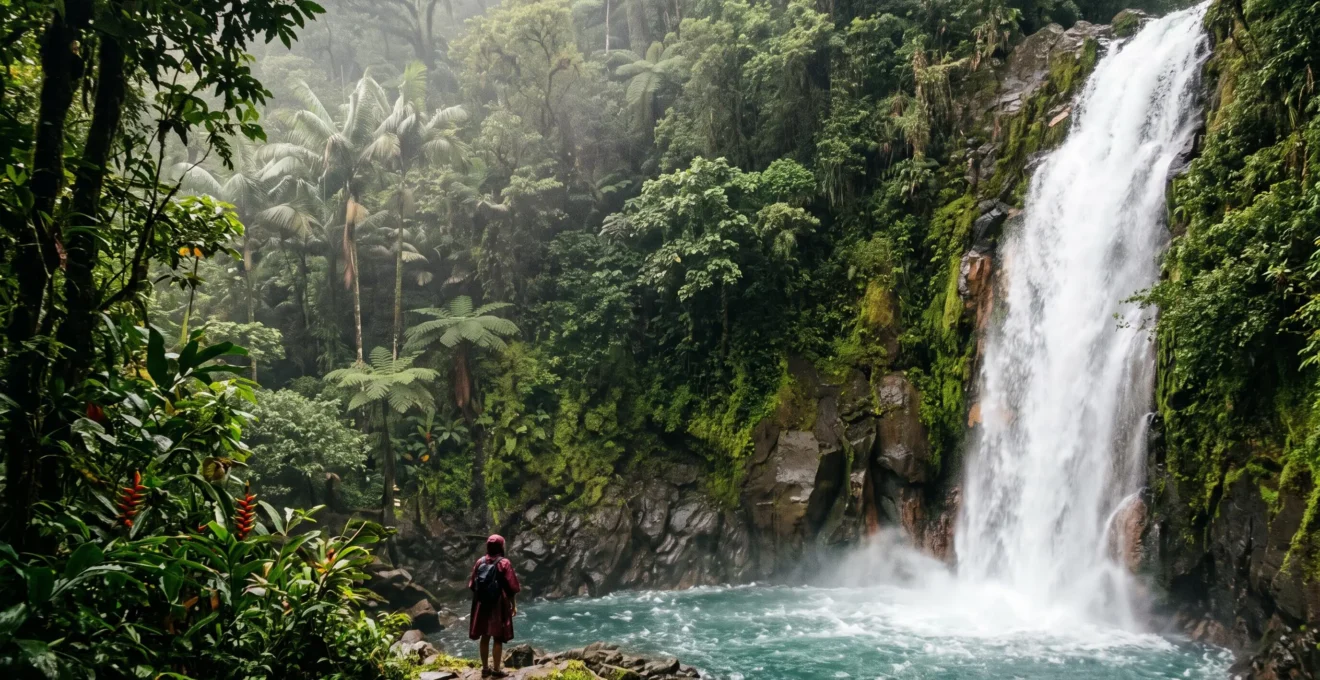
To witness El Limón’s most dramatic flow, aim for late September through November, when cumulative rainfall saturates the watershed, maximising the cascade’s power.
- The waterfall’s volume is directly tied to the delayed response of its watershed to seasonal rains, not just immediate downpours.
- Avoiding the 11 AM to 2 PM window is critical to bypass large tour groups arriving from distant resorts like Punta Cana.
Recommendation: Prioritise a visit late in the wet season for peak flow and arrive before 9:30 AM for a more serene experience.
For any true waterfall enthusiast, the difference between a thundering cascade and a disappointing trickle is everything. At El Limón in the Dominican Republic’s Samaná Peninsula, this difference is a matter of precise timing. Many visitors arrive hoping for a spectacular show, only to find a shadow of the powerful torrent they envisioned. The common advice is simply to « visit during the rainy season, » but this is a blunt instrument for a goal that requires surgical precision. The key isn’t just knowing when it rains, but understanding how the landscape itself collects and releases that water.
This is not a matter of luck. The dramatic power of El Limón is a predictable event, governed by the principles of hydrology. To witness its peak performance, you must think less like a tourist and more like a seasonal flow analyst. It requires looking beyond a simple weather forecast and considering the cumulative saturation of the Arroyo Chico watershed, the time lag between rainfall and river discharge, and the logistical realities that bring hundreds of other people to the same spot at the exact same time.
This guide moves beyond generic advice to provide a month-specific, data-informed strategy. We will analyse the seasonal flow patterns to pinpoint the optimal window for dramatic views, dissect the pros and cons of reaching the falls, address the real safety concerns of swimming in its plunge pool, and provide a clear plan to sidestep the crowds. By understanding the ‘why’ behind the water flow, you can perfectly time your visit for an experience that is not just a photo opportunity, but a powerful encounter with nature.
To help you craft the perfect adventure, this analysis is broken down into key strategic components. The following sections will guide you through understanding the waterfall’s unique hydrology, the logistical choices for your journey, and how to place this experience within the broader context of Samaná’s adventure landscape.
Summary: A Strategic Guide to Experiencing El Limón Waterfall
- Why Does El Limón Waterfall Nearly Dry Up in March and April?
- Horseback Ride or Hike to El Limón: Which Is More Comfortable?
- Is Swimming in El Limón’s Plunge Pool Safe With Strong Waterfall Currents?
- The El Limón Timing Error That Puts You With 200 Other Tourists
- How to Support El Limón Local Guides Through Ethical Tour Bookings?
- Why Is Samaná Better for Adventure Seekers Than Punta Cana’s Flat Coastline?
- Salto de Jimenoa or Salto de Baiguate: Which Jarabacoa Waterfall Is Worth Hiking?
- What Adventure Activities in Samaná Go Beyond the Standard Whale Watching Tours?
Why Does El Limón Waterfall Nearly Dry Up in March and April?
The dramatic fluctuation of El Limón is a direct result of its reliance on a distinct seasonal rainfall pattern. The waterfall is fed by the Arroyo Chico river, whose flow is almost entirely dependent on precipitation within its watershed. The core of the issue lies in the transition from the wet season to the pronounced dry season, which typically runs from late December to early May. While the entire period sees less rain, March and April represent the nadir of this cycle, a point of maximum hydrological attenuation where the ground is parched and the river’s base flow is at its absolute minimum.
The region receives a substantial amount of precipitation annually, but its distribution is highly concentrated. An analysis of the climate shows that the area gets between 2,000–2,500 mm of annual rainfall, with the vast majority falling during the wettest months from May through November. After months of little to no significant rain, the watershed’s soil and groundwater reserves are depleted. Any minor showers during the dry season are absorbed by the thirsty ground long before they can contribute to surface runoff and feed the river. This results in the « disappointing trickle » many unprepared visitors encounter.
The visual evidence on the ground during these months is stark, as local guides can attest. It’s not just the main cascade that shrinks; the entire river system is diminished.
Because of lower than average rainfall, a local guide pointed out how much lower and narrower the falls had become compared to the river and ponds’ normal, faster-flowing state.
To see the falls in their full glory, one must wait for the cumulative saturation that occurs later in the wet season. The first rains in May and June are largely absorbed, replenishing the dry soil. It is only from late summer into autumn (September-November) that the ground becomes fully saturated, allowing subsequent rainfall to translate directly into powerful runoff and the spectacular, thundering peak flow that waterfall enthusiasts seek.
Horseback Ride or Hike to El Limón: Which Is More Comfortable?
Choosing your mode of transport to the falls is a key logistical decision with significant implications for comfort, experience, and ethics. The trail is approximately 2.5 kilometers of often muddy, hilly, and uneven terrain. The two options, hiking on foot or riding a horse led by a local guide, offer vastly different experiences. For a UK visitor accustomed to temperate hikes, the tropical humidity and terrain can make the walk more strenuous than its distance suggests. A horseback ride, by contrast, reduces the physical exertion but introduces other factors to consider, namely animal welfare and pace.
This paragraph introduces a comparison of the hiking and horseback riding options for reaching El Limón waterfall, based on information synthesised from visitor guides. It helps you weigh the factors of duration, effort, and control for each choice.
| Factor | Hiking | Horseback Ride |
|---|---|---|
| Approximate Duration | 1.5 hours | 40 minutes |
| Physical Effort | Higher, sustained exertion | Lower, but core/balance engagement |
| Pace Control | Full control, easy to stop for photos | Set by guide and animal |
| Key Consideration | Footwear and stamina | Animal welfare and guide professionalism |
While the horseback ride is undeniably faster and less physically demanding, it has raised ethical concerns among some visitors regarding the condition of the animals. Reports vary, but it is a factor worth being aware of.
One traveler described the horses used on the trail as malnourished and very small, saying they appeared not to be well cared for.
This is not a universal experience, and many operations take great care of their animals, which are a vital part of their livelihood. The best approach for those opting for a horse is to choose a reputable tour operator or assess the condition of the animals at the trailhead (parada) before committing. A healthy horse is a good indicator of a professional operation. The journey itself, guided by a local through the dense jungle, can be a memorable part of the adventure.
Ultimately, the choice is personal. Hiking offers complete autonomy and a more intimate connection with the trail’s environment, but requires a good level of fitness and appropriate footwear for mud and river crossings. The horseback ride offers comfort and speed, turning the journey into a different kind of experience, but it places a responsibility on the visitor to make an ethically-informed choice.
Is Swimming in El Limón’s Plunge Pool Safe With Strong Waterfall Currents?
The allure of swimming in the turquoise plunge pool at the base of a 40-metre tropical waterfall is undeniable. For most of the year, particularly during the drier months, it’s a relatively safe and incredibly refreshing experience. However, during the peak flow periods that waterfall enthusiasts actively seek out, the question of safety becomes paramount. The same immense power that creates a dramatic spectacle also generates powerful currents, underwater turbulence, and a significant amount of spray and mist, which can make the experience challenging and potentially hazardous.
When the waterfall is at its most powerful (typically September to November), the sheer volume of water crashing into the pool creates a strong, aerated current that can be difficult to swim against. The area directly beneath the falls is a zone of intense turbulence that should always be avoided. Rocks below the surface can be slippery and difficult to see, and the force of the water can easily unbalance even strong swimmers. While a life jacket is a sensible precaution, it’s crucial to respect the raw power of the water and maintain a safe distance from the main impact zone.
It’s also important to consider the broader context of water safety in the Dominican Republic. While El Limón itself isn’t a notorious danger spot, a report noted that approximately 310 drownings were recorded nationwide in 2025, highlighting that water-related incidents are a general safety concern. This isn’t to create alarm, but to encourage a mindset of caution. The key is to assess the conditions on the day of your visit. If the current appears visibly strong and the roar of the water is deafening, it may be wiser to enjoy the swim in the calmer sections of the pool, away from the direct force of the cascade.
Never swim alone, and always be aware of your own swimming ability. The pool is deep and the bottom is uneven. The safest approach during peak flow is to treat the pool as a place for a refreshing dip in the calmer shallows, rather than an attempt to challenge the waterfall’s power directly. The spectacle is best enjoyed from a safe distance, allowing you to appreciate its force without becoming a part of it.
The El Limón Timing Error That Puts You With 200 Other Tourists
Beyond timing your visit for optimal water flow, timing it to avoid the crowds is the other half of the equation for a truly magical experience. The single biggest mistake visitors make is arriving between 11 AM and 2 PM. This window is when the waterfall is at its most crowded, transforming a serene natural wonder into a busy tourist hotspot. This midday rush is not a coincidence; it’s a direct result of tour bus logistics, particularly those arriving from the distant resort areas of Punta Cana.
The journey from the main resorts is a long one, and the itineraries of large tour operators are designed to make it a full-day excursion. With the approximate distances to the trailheads being up to 4.5 hours from Punta Cana, tour buses naturally converge on El Limón in the middle of the day. They arrive in large numbers, often simultaneously, unloading dozens of visitors who then move along the trail and into the swimming hole in a large, concentrated group. This can significantly diminish the feeling of natural immersion that most visitors are seeking.
The solution is a simple but effective counter-timing strategy. By planning your arrival outside of this peak tour bus window, you can experience the falls with a fraction of the people. This requires either an early start or a late arrival, a strategy that is much easier for those staying locally in Samaná, Las Terrenas, or Las Galeras.
Your Action Plan: Strategic Timing to Avoid the Crowds
- Early Bird Arrival: Plan to arrive at the trailhead no later than 9:00 AM. This ensures you are on the trail when it is cooler and quieter, well before the large tour groups from the cruise port and Punta Cana show up.
- Late Afternoon Slot: Alternatively, arrive after 2:30 PM. By this time, the large groups are typically finishing their visit and heading back, thinning out both the trail and the waterfall area for a more peaceful experience.
- Pair Your Activities Wisely: If you are planning other activities like whale watching (in season) or a beach visit, schedule them for the midday slot. This allows you to allocate the quiet morning or late afternoon hours to the waterfall.
- Check the Forecast: Use the official meteorological forecast from ONAMET (the National Office of Meteorology). This helps you time your visit not just for crowds, but also for recent rainfall to maximise the chance of seeing a strong flow.
- Stay Local: The easiest way to apply this strategy is to stay in the Samaná Peninsula. This gives you the flexibility to visit El Limón at the optimal times without being constrained by a long-distance travel schedule.
By consciously avoiding the logistical bottleneck created by mass tourism, you give yourself the best possible chance of experiencing El Limón as it should be: a powerful and personal encounter with one of the Caribbean’s most beautiful natural sites.
How to Support El Limón Local Guides Through Ethical Tour Bookings?
The journey to El Limón is facilitated by a community of local guides, particularly for those who choose the horseback option. Engaging with them ethically is a crucial part of a responsible visit, ensuring that your tourism dollars directly support the local economy. However, the compensation structure for many guides is not always transparent, and understanding it is key to ensuring they are fairly paid for their hard work.
For many guides who lead the horses, their primary income is not a salary from the ranch or tour operator, but the tips they receive directly from visitors. This is a vital piece of information that is not always communicated upfront. Visitors may assume the fee for the horse includes the guide’s service, which can lead to unintentional underpayment. This structure makes your tip not just a bonus for good service, but their fundamental wage.
One traveler reported that each rider is assigned a guide to help with the horse, and at the end of the ride the guide explains they are not paid by the ranch and a tip of around $20 per person is expected.
Knowing this, it’s essential to budget for a proper tip. While the amount can vary based on the quality of service, having a baseline in mind is helpful. Guides not only lead the horse but also assist riders over tricky terrain, point out interesting flora and fauna, and often help with taking photos. One travel guide suggests visitors should plan to tip at least 500 pesos (~$10 USD) or more for excellent service. Carrying enough cash in small denominations (Dominican Pesos or US Dollars) is therefore essential, as electronic payment options are not available on the trail.
To further support the local community, consider hiring a guide directly from one of the official stops (‘paradas’) at the trailheads in the community of El Limón, rather than booking through a large, all-inclusive package from a distant resort. This ensures a larger portion of the money stays within the community. Ask questions, engage with your guide, and see the tip as a direct and impactful way to contribute to the local economy and reward a physically demanding job.
Why Is Samaná Better for Adventure Seekers Than Punta Cana’s Flat Coastline?
For a traveller whose heart is set on dramatic landscapes and physical exploration, the choice between the Samaná Peninsula and the popular resorts of Punta Cana is a fundamental one. The difference is topographical. Punta Cana is renowned for its long, flat, white-sand beaches and calm turquoise waters—a paradise for relaxation. Samaná, in contrast, is a land of dramatic, untamed geography. It’s a peninsula defined by its rugged, jungle-clad mountains (the Cordillera Samaná) that plunge directly into the sea, creating a coastline of hidden coves, dramatic cliffs, and a wild interior ripe for adventure.
This mountainous terrain is precisely what makes experiences like El Limón waterfall possible. The elevation changes create the rivers and gravitational force necessary for impressive cascades, a feature entirely absent from Punta Cana’s flat coastal plain. The Dominican Republic’s own Ministry of Tourism captures this spirit of journey and discovery.
Reaching El Limón waterfall is an adventure that takes you on a 2.5-kilometer journey through thick forest, on horseback or on foot down lush hilly terrain, while spotting flora and fauna along the way.
– Dominican Republic Ministry of Tourism, Official Tourism Website
This quote highlights that the journey is as much a part of the adventure as the destination. The very act of navigating the « lush hilly terrain » is the essence of the Samaná experience. Beyond waterfalls, this rugged landscape gives rise to a host of other adventures: trekking through national parks like Los Haitises with its unique karst formations, exploring remote beaches accessible only by boat or trail, and discovering a side of the Dominican Republic that feels a world away from the manicured all-inclusive resorts.
Choosing Samaná is a choice for the traveller who wants to be an active participant in their environment, not just a passive observer. It’s for the person who sees a mountain and wants to know what’s on the other side, who finds beauty in a muddy trail, and who seeks the reward that comes after a challenging journey. While Punta Cana offers unparalleled relaxation, Samaná offers unforgettable exploration.
Salto de Jimenoa or Salto de Baiguate: Which Jarabacoa Waterfall Is Worth Hiking?
For the dedicated waterfall enthusiast exploring beyond Samaná, the mountain town of Jarabacoa is the Dominican Republic’s undisputed capital of cascades. If your itinerary includes this inland region, you’ll be faced with a choice between its three most famous falls: Salto de Jimenoa I, Salto de Jimenoa II, and Salto de Baiguate. While all are beautiful, they offer very different experiences in terms of hiking difficulty, accessibility, and swimming opportunities. Making the right choice depends on your priorities: are you seeking a physically demanding hike, an iconic photo, or a social swimming spot?
Salto de Jimenoa I is known for its dramatic, powerful drop, but reaching it involves a steep and physically demanding hike. Jimenoa II, featured in the movie *Jurassic Park*, is the most iconic, easily accessible via a short walk and a series of suspension bridges, making it more crowded. Salto de Baiguate, on the other hand, is the most swimmer-friendly, with a gentler hike and a large, inviting pool that makes it a popular spot for families and groups. The trail profiles clearly differentiate the vibe of each location.
This comparative table, compiled from hiking guide data, breaks down the key differences between Jarabacoa’s main waterfalls to help you choose the one that best fits your hiking ability and desired experience.
| Waterfall | Trail Length | Difficulty | Vibe |
|---|---|---|---|
| Salto de Jimenoa I | ~0.7 mi loop | Physically demanding, steep | Dramatic, photogenic, less swimming |
| Salto de Jimenoa II | Short, easy walkway | Easy | Iconic bridge views, moderate crowds |
| Salto de Baiguate | ~0.7 mi loop | Easy | Social, swimmable, family-friendly |
If time is limited and you can only visit one, the local consensus often points towards a clear winner for the best all-around experience. While Baiguate is best for swimming and Jimenoa I is best for a challenging trek, it is Jimenoa II that provides the most iconic visual reward for the least amount of effort.
One long-time forum contributor summed it up simply: if you can only visit one of the falls, choose Salto Jimenoa #2.
This makes Salto de Jimenoa II the pragmatic choice for most visitors to Jarabacoa who want to guarantee a memorable waterfall view without committing to a difficult hike. For the dedicated trekker, however, combining the challenging trail to Jimenoa I with the scenic views of Jimenoa II would create the ultimate Jarabacoa waterfall itinerary.
Key Takeaways
- Optimal Timing is Key: To see El Limón at its most powerful, visit in the late rainy season (Sept-Nov), and to avoid crowds, arrive before 9:30 AM or after 2:30 PM.
- Ethics and Comfort Matter: The choice between a strenuous hike and a horseback ride involves comfort, but also a responsibility to consider animal welfare and ensure guides are tipped fairly, as this is often their primary wage.
- Samaná is for Adventure: The peninsula’s rugged, mountainous terrain is fundamentally different from Punta Cana’s flat coastline, making it the superior choice for travellers seeking waterfalls, hiking, and exploration.
What Adventure Activities in Samaná Go Beyond the Standard Whale Watching Tours?
While the magnificent humpback whales (in season from January to March) are Samaná’s most famous attraction, the peninsula’s adventurous spirit extends far beyond its coastline. The same rugged geography that creates El Limón waterfall cultivates a landscape rich with opportunities for exploration. For the traveller looking to build a multi-day itinerary of active discovery, Samaná offers a compelling variety of experiences that immerse you in its unique ecosystems, from dense jungles to coastal caves.
A natural pairing with a visit to El Limón is an expedition to Los Haitises National Park. This protected area, located on the southern side of Samaná Bay, is a world of its own. It’s a stunning example of a coastal karst landscape, characterized by small, verdant hills (mogotes) that rise dramatically from the water. Exploring the park by boat takes you through a labyrinth of mangrove forests, into vast caves adorned with pre-Columbian Taino pictographs, and past rocky islets teeming with birdlife, including frigatebirds and pelicans. It offers a fascinating glimpse into both the natural and cultural history of the island.
Case Study: Los Haitises National Park as a Samaná Adventure Pairing
Beyond El Limón, Los Haitises National Park is frequently highlighted as a premier nearby attraction. Its unique combination of caves, extensive mangrove systems, and wildlife viewing opportunities makes it a perfect full-day adventure for travelers already based in the Samaná area. For those visiting during the whale season, it’s possible to combine a boat tour of Los Haitises with whale watching, creating a comprehensive marine and terrestrial eco-tour that showcases the incredible biodiversity of Samaná Bay.
Other adventures include exploring the world-class beaches of the peninsula. While Playa Rincón is often cited as one of the most beautiful beaches in the world, reaching it can be an adventure in itself via a bumpy road or a boat trip. For a more secluded experience, the trek to Playa Frontón, a stunning beach backed by a 90-metre cliff wall, is a rewarding challenge accessible by a tough hike or by boat from Las Galeras. Add in opportunities for zip-lining through the jungle canopy, kitesurfing in Las Terrenas, or simply exploring the vibrant small towns, and it’s clear that Samaná is a destination that rewards the curious and active traveller far beyond a single waterfall or whale tour.
To transform your visit from a simple tourist stop into a genuine adventure, the next step is to use this hydrological and logistical insight to plan your Samaná itinerary with precision and purpose. Evaluate the season, choose your travel style, and build a journey that connects you with the wild heart of this unique peninsula.